
Pennsylvania Child Sexual Abuse Lookback Bill Stalls Again
Pennsylvania’s proposed two-year lookback window for childhood sexual abuse lawsuits remains stalled in the state Senate, leaving survivors with expired claims facing further delays.
 Skip to content


Pennsylvania’s proposed two-year lookback window for childhood sexual abuse lawsuits remains stalled in the state Senate, leaving survivors with expired claims facing further delays.

Michigan lawmakers sent a bill to Gov. Gretchen Whitmer that would limit restraints and overnight pickups by companies transporting children to residential treatment programs.

California Gov. Gavin Newsom has signed SB 577, which changes evidentiary and liability rules for some childhood sexual abuse claims against public entities while adding new prevention requirements.
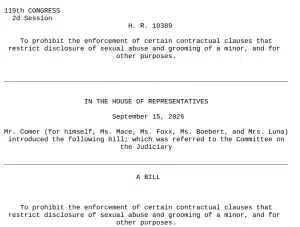
Rep. James Comer (R-KY) introduced a federal bill that would make certain nondisclosure agreements involving sexual abuse unenforceable, including some agreements signed before the law takes effect.
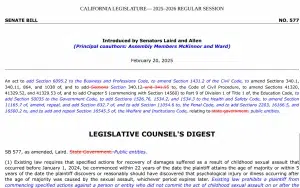
California lawmakers have sent SB 577 to Gov. Gavin Newsom. The bill preserves many childhood sexual abuse lawsuits against public entities without capping damages, but some survivors age 40 and older could face a tougher evidentiary standard.
A bipartisan Senate bill could give military sexual trauma survivors a new path to hold the federal government accountable for negligence. Here’s what the proposed law would change and how veterans can pursue existing MST benefits and claims.

Colorado’s Rideshare Safety and Accountability Act takes effect August 12, adding new requirements for Uber, Lyft and other rideshare companies involving sexual assault complaints, driver screening and passenger safety.
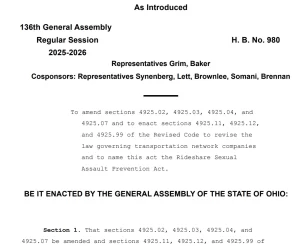
Ohio lawmakers have introduced H.B. 980, the Rideshare Sexual Assault Prevention Act, which would increase driver background checks, speed complaint reviews and expand rideshare safety oversight.

Uber and California trial attorneys have reached a proposed deal that includes new rideshare safety standards aimed at preventing sexual misconduct, as Uber continues to face thousands of sexual assault claims in federal court.

Uber’s liability fight has reached Congress. A new amendment to a major federal transportation bill could limit when rideshare companies can be held responsible for harm caused by drivers, raising concerns for passengers and sexual assault survivors.
Idaho lawmakers are moving forward with Isaiah’s Law and the Foster Child Safety Act, proposals designed to strengthen court guidance, visitation safety, and fundamental protections for foster children. Advocates say the reforms reflect growing efforts to improve child welfare safeguards.

Virginia’s Law could reshape federal sexual abuse litigation by eliminating civil filing deadlines. The proposed legislation would allow survivors whose claims were previously time-barred to pursue justice in federal court.

Just one year after Colorado lawmakers uncovered a rape kit backlog that forced survivors to wait more than 500 days for DNA results, the Colorado Bureau of Investigation is now on track to meet its 90-day testing goal seven months ahead of schedule, a shift officials say marks major progress, while survivors and legislators stress that systemic reforms are still needed.

Georgia’s House Judiciary Committee unanimously approved Trey’s Law, a bill that would prevent childhood sexual abuse survivors from being silenced by nondisclosure agreements tied to settlements.

Kansas legislators are moving forward with a bill that would require clergy to report suspected child abuse, following survivor testimony and broad support.