Skip to content

Editor’s Note: This article is based on reporting from the Orange County Register and a Care2 petition.
Photo by Ilya Plekhanov via Wikimedia Commons, licensed under CC BY-SA 4.0.
A former Uber driver in Southern California has been sentenced to eight years in prison for sexually assaulting a passenger who was too impaired to consent, while a new petition is calling on Uber to change how it defends itself against sexual assault lawsuits.
Amir Attia, 51, of Tustin, California, was sentenced Sept. 3 after being convicted in July of two counts involving sexual assault of an intoxicated passenger.
The woman had been placed into an Uber by police after a 2018 traffic incident and was significantly impaired at the time. According to testimony summarized in MyNewsLA, she fell asleep shortly after getting into Attia’s vehicle and later sought medical care after waking the next morning with concerns that she had been assaulted.
Judge Says Passengers Trust Drivers to Get Them Home Safely
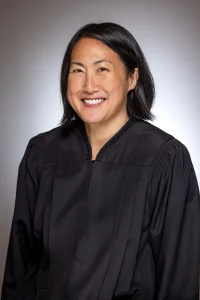
During sentencing, Orange County Superior Court Judge Gary Haskins focused on the vulnerability of passengers who use rideshare services after drinking or when they’re otherwise unable to safely drive themselves.
Haskins said nighttime passengers often depend on drivers to get them from one place to another safely and noted that the woman in this case had placed that trust in Attia.
Prosecutors said Attia initially denied sexual contact with the passenger, then changed portions of his account as investigators confronted him with additional evidence.
Attia maintained at trial that the encounter was consensual.
The passenger separately sued Uber and later reached a settlement, according to testimony reported in the criminal case.
Petition Accuses Uber Lawyers of Aggressive Tactics Against Survivors
At the same time, a petition posted by Care2 is urging Uber to overhaul the way it handles civil lawsuits brought by passengers who allege they were sexually assaulted by drivers.
The petition cites thousands of lawsuits against Uber and criticizes defense tactics that allegedly include questioning survivors about alcohol use, clothing, therapy records, medical history and prior trauma.
Care2 argues that those tactics conflict with Uber’s public messaging about supporting survivors of sexual violence.
The criticism echoes a broader debate over how aggressively companies should defend themselves in sexual assault litigation, particularly when survivors are required to disclose deeply personal records or answer questions about past experiences that may have little to do with the alleged assault itself.
Civil Lawsuits Focus on Uber’s Responsibility, Not Just Drivers
The criminal case against Attia centered on his individual conduct.
The thousands of civil cases against Uber raise a different legal question: whether the company itself should bear responsibility for assaults allegedly committed by drivers using its platform.
Passengers have accused Uber in lawsuits of failing to adequately screen drivers, respond to warning signs, remove dangerous drivers and implement stronger safety measures.
Uber has disputed many of those allegations and has said that sexual violence has no place on its platform.
The company has also introduced safety tools and survivor-focused initiatives over the years, while continuing to contest liability in court.
That tension is at the center of the Care2 petition.
The petitioners argue that Uber cannot publicly promote trauma-informed treatment of survivors while allowing litigation strategies they say scrutinize survivors’ personal histories in ways that can feel blaming or invasive.
Civil claims against Uber typically involve separate questions about what the company knew, what safety measures it used and whether its policies or practices contributed to the risk passengers faced.
That is one reason the Uber sexual assault litigation has become so significant.
As of July 2026, 3,940 lawsuits were pending in the federal Uber sexual assault MDL, with hundreds more proceeding in coordinated California state-court litigation; the California proceeding had already grown to more than 600 cases by 2025. Three cases have produced jury verdicts so far. In the first California state trial, jurors found Uber negligent but not legally liable for the survivor’s injuries, resulting in no damages award.
The first two federal bellwether trials produced plaintiff verdicts. A Phoenix jury awarded $8.5 million to a survivor in February 2026 after finding the driver acted as Uber’s apparent agent, while a North Carolina jury awarded $5,000 in the second federal trial after again finding Uber legally responsible for the driver’s conduct.
The cases are not only about whether individual assaults occurred. They also ask what responsibility a rideshare company has when it creates a platform that places strangers together in vehicles, sometimes late at night and sometimes when passengers are especially vulnerable.
The Attia case illustrates that vulnerability particularly clearly.
Police had placed the woman into an Uber because she was not in a condition to safely drive herself. The service she relied upon to get home safely instead became the setting for the crime for which Attia has now been convicted and sentenced.
For survivors pursuing civil cases, the next question is whether Uber itself can be held accountable for what allegedly went wrong before, during or after an assault.
Learn More About Uber Sexual Assault Lawsuits
Thousands of passengers have filed claims alleging sexual assault involving Uber drivers and questioning whether the company did enough to protect riders.
Learn more about the litigation, allegations against Uber and legal options that may be available to survivors in our Uber Sexual Assault Lawsuit Guide.