Skip to content
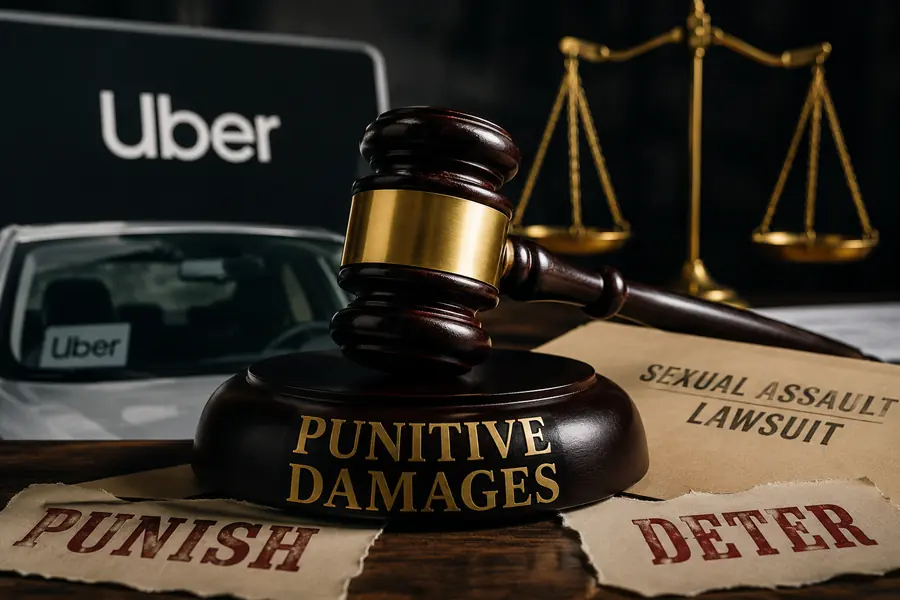
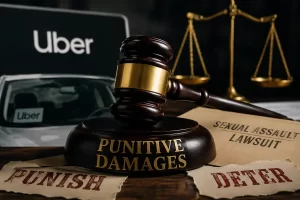
Uber is asking a federal judge to prevent a plaintiff from pursuing punitive damages in the next bellwether trial involving allegations of sexual assault by an Uber driver.
The upcoming Texas trial will be the third federal test case in multidistrict litigation involving more than 3,000 lawsuits against Uber. The cases generally accuse the rideshare company of failing to take adequate steps to protect passengers despite receiving reports of sexual misconduct involving drivers.
Uber denies responsibility for assaults committed by drivers and has repeatedly argued that drivers are independent contractors rather than company employees.
Ahead of the third bellwether trial, Uber filed a motion asking the court to dismiss the plaintiff’s claim for punitive damages.
Punitive damages are different from compensation for medical expenses, emotional distress, lost income, and other losses. They are intended to punish especially reckless or wrongful conduct and discourage similar behavior in the future.
Uber argues that Texas law does not allow punitive damages against a company based solely on the criminal conduct of a third party. According to the company, the plaintiff must present evidence connecting the alleged misconduct to Uber’s own corporate decisions or to someone with sufficient authority within the company.
The plaintiff is expected to argue that Uber knew about the broader risk of assaults involving drivers but failed to implement adequate safety protections, Law360.com reported [paywall].
The judge’s ruling could significantly affect the potential value of the case. A jury could still award compensatory damages even if punitive damages are removed from consideration.
What the Third Uber Bellwether Case Alleges
The lawsuit was brought by a woman who alleges that she was assaulted by an Uber driver during a ride in Texas in 2020.
The driver was later convicted in connection with the incident and sentenced to prison. The lawsuit seeks to hold Uber legally responsible for the harm allegedly caused by a driver using its platform.
The trial is expected to begin in fall 2026. As with the previous bellwether proceedings, its outcome will not automatically decide the thousands of other lawsuits pending against Uber.
However, the verdict could provide both sides with additional information about how juries evaluate Uber’s legal responsibility and what damages may be awarded in different types of claims.
What Is the Uber Sexual Assault MDL?
The federal Uber sexual assault litigation has been consolidated before U.S. District Judge Charles Breyer in the Northern District of California.
An MDL, or multidistrict litigation, brings similar federal lawsuits before one judge for coordinated pretrial proceedings. The claims remain individual cases rather than becoming one class action.
Centralizing the cases allows the court to manage common issues such as document production, witness testimony, motions, and bellwether trials more efficiently.
Plaintiffs generally allege that Uber knew passengers faced a risk of sexual assault but did not adopt sufficient safeguards. Some lawsuits challenge the company’s driver screening, monitoring, complaint-response procedures, and safety features.
Uber maintains that it has invested heavily in passenger safety and that it should not be held automatically liable for the independent criminal conduct of drivers.
More than 3,000 federal cases have been consolidated in the MDL, with hundreds of additional claims pending in California state court.
First Federal Bellwether Produced an $8.5 Million Verdict
In February 2026, an Arizona federal jury ordered Uber to pay $8.5 million in compensatory damages to the plaintiff, who
alleged that she was assaulted by an Uber driver in 2023 when she was 19 years old. The jury found that the driver acted as Uber’s apparent agent, making the company legally responsible for his conduct.
The jury did not find Uber independently negligent and declined to award punitive damages. Uber announced plans to appeal the verdict.
The decision was nevertheless a major development because it showed that a jury could hold Uber responsible for a driver’s actions even without finding that the company itself negligently caused the assault.
Second Federal Verdict Awarded Only $5,000
In April 2026, a North Carolina federal jury reached another verdict against Uber but awarded the plaintiff only $5,000.
The plaintiff alleged that a driver grabbed her inner thigh and made an inappropriate remark near the end of a 2019 ride. The jury found that a battery occurred and held Uber legally responsible for the driver’s conduct.
Uber emphasized the comparatively small award and indicated that it would appeal.
Why Were the Two Verdicts So Different?
The difference between an $8.5 million award and a $5,000 award does not necessarily mean that one jury took Uber’s liability more seriously than the other.
The two cases involved very different alleged conduct, injuries, supporting evidence, and claims for damages.
In the Arizona case, the plaintiff alleged a severe sexual assault with substantial and lasting emotional harm. The jury awarded millions in compensation for the consequences of that incident.
The North Carolina case involved an unwanted touching that the jury classified as battery rather than sexual assault. The evidence concerning the plaintiff’s damages and long-term harm also differed substantially from the first case.
Civil juries generally determine compensation based on the harm established in the individual case, such as the severity and duration of the misconduct and other factors.
The enormous gap between the verdicts demonstrates why bellwether cases cannot establish one standard settlement value for every plaintiff as is the case with a class action lawsuit.
They instead help reveal how different factual patterns, legal theories, and evidence may affect the result.
Punitive Damages In Uber Sexual Assault Lawsuits
Neither of the first two federal verdicts included punitive damages.
The first jury expressly declined to award them, while the much smaller second verdict focused on compensation arising from the driver’s conduct.
The third plaintiff’s effort to keep punitive damages in the case raises the potential stakes. If the judge allows the claim to proceed, the jury could be asked not only to compensate the plaintiff but also to decide whether Uber’s own conduct warrants punishment.
A ruling in Uber’s favor would not eliminate the lawsuit or prevent an award of compensatory damages. It would, however, remove one path to a potentially larger verdict.
The dispute may also offer clues about a recurring question throughout the MDL: whether plaintiffs can connect assaults by individual drivers to broader company policies and decisions.
Bellwether Results May Shape Future Settlement Talks
Bellwether trials are designed to test representative cases from a much larger pool of lawsuits.
Their verdicts do not bind plaintiffs whose cases have not yet been tried. Still, both sides can use the results to assess litigation risk and explore possible settlements.
Were You Assaulted by an Uber Driver?
Thousands of passengers have filed lawsuits alleging that Uber failed to protect them from sexual misconduct by drivers. Eligibility to pursue a claim depends on factors including where and when the incident occurred.