Skip to content

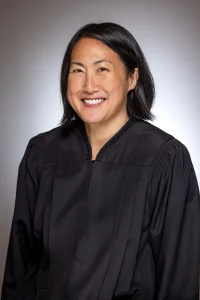
Photo via Wikipedia.
Uber is asking a federal appeals court to review a Charlotte jury’s verdict that found the company liable after a North Carolina woman testified that an Uber driver sexually assaulted her during a 2019 ride, AOL reported.
The case was brought by Brianna Mensing, who testified during trial in the U.S. District Court for the Western District of North Carolina that the assault happened during only her second Uber ride. Mensing said the driver asked her to sit in the passenger seat and then grabbed her upper inner thigh.
Uber disputed Mensing’s account during trial, arguing that she had “zero proof” of the assault. The company’s defense also challenged her reliability, pointing to the timing of the alleged assault in March 2019, when Uber’s attorneys said Mensing was near the height of her struggle with drug addiction.
The jury believed her.
Jurors found that Uber was liable for the assault and awarded Mensing $5,000. U.S. District Judge Charles R. Breyer, who is overseeing the broader federal Uber passenger sexual assault litigation, instructed the jury that North Carolina law made Uber responsible for assaults that occur during rides. The Associated Press reported that the judge treated Uber as a common carrier under North Carolina law, a classification that can carry heightened responsibility for passenger safety.
Uber Challenges Jury Verdict
Uber filed its appeal on May 19 with the Fourth U.S. Circuit Court of Appeals. In a statement to The Charlotte Observer, the company said “the verdict was the product of multiple legal errors.”
A safety spokesperson for Uber said the judge’s conclusion that Uber is liable for rider assaults in North Carolina “is inconsistent with longstanding North Carolina law” and that the verdict “was the product of multiple evidentiary errors that gave the jury a one-sided view of the facts.”
A plaintiff’s attorney previously told The Charlotte Observer that “Uber comes into court and tries to trash victims, but nine people sitting on the jury believed her.” Mensing’s legal team did not respond to the Observer’s request for comment on the appeal.
Part Of The Larger Uber Sexual Assault MDL
Mensing’s case is part of a much larger multidistrict litigation involving passengers who allege that Uber drivers sexually assaulted, raped, harassed, or otherwise harmed them during rides.
The federal litigation has consolidated thousands of similar claims before Judge Breyer in the Northern District of California. The lawsuits generally allege that Uber failed to implement adequate safety measures, failed to properly screen or monitor drivers, failed to warn riders about known risks, and failed to adequately respond to reports of sexual misconduct. Reuters has reported that the litigation includes more than 3,000 cases.
The Charlotte case was one of the bellwether trials in the broader litigation. Bellwether trials do not decide every case, but they can help both sides evaluate how juries may respond to evidence, liability arguments, survivor testimony, damages, and Uber’s defenses.
Second Major Bellwether Loss For Uber
The Charlotte verdict followed a major Arizona trial earlier this year in which a federal jury awarded $8.5 million to a woman who said she was raped by an Uber driver. Reuters reported that the Arizona jury found Uber liable for the driver’s actions, although it rejected negligence claims and did not award punitive damages. Uber said it planned to appeal that verdict as well.
Together, the Arizona and North Carolina verdicts have become important markers in the Uber sexual assault litigation. The Arizona verdict involved a much larger damages award, while the North Carolina verdict was smaller financially but still significant because the jury found Uber liable after the company directly challenged the survivor’s credibility.
Uber has long argued that it should not be held responsible for criminal misconduct by drivers, who the company classifies as independent contractors. Plaintiffs, meanwhile, have argued that riders use Uber because of the company’s brand, app, payment system, driver matching process, and safety promises, and that Uber should be accountable when its platform allegedly fails to protect passengers.
Uber’s Safety Defense
Uber has maintained that it has invested heavily in rider safety and that assaults represent a small fraction of rides on the platform. The company has pointed to in app safety tools, GPS tracking, background checks, rider and driver ratings, emergency assistance features, and other safety measures.
But plaintiffs in the litigation argue that Uber knew for years that riders were reporting sexual assaults and other forms of sexual misconduct by drivers. The Verge, citing Uber safety reporting, noted that Uber received 12,522 sexual assault reports from 2017 through 2022, with nearly 70% involving drivers.
That broader context is central to the litigation. The lawsuits are not only about individual drivers. They are about whether Uber knew enough about the risk of sexual assault to do more, whether the company’s safety systems were adequate, and whether riders were given a fair understanding of the risks before getting into a stranger’s car.
Uber’s appeal could have implications beyond Mensing’s $5,000 verdict. If the Fourth Circuit agrees with Uber that the trial judge applied the wrong legal standard or gave improper jury instructions, it could affect how future North Carolina claims are handled.
But if the verdict stands, it may strengthen plaintiffs’ arguments that Uber can be held liable for driver assaults under certain state laws, even when the company continues to argue that drivers are independent contractors rather than employees.
For survivors in the broader litigation, the appeal is another reminder that these cases are rarely simple. Even after a jury believes a survivor, the legal fight can continue for months or years.
For Uber, the appeal is part of a larger strategy to challenge the legal theories that could expose the company to broader liability across thousands of pending sexual assault claims.
For the public, the Charlotte case underscores a larger question at the center of the Uber litigation: when a company builds a transportation platform around trust, convenience, and safety, what responsibility does it have when passengers say that trust was violated in the most personal way possible?
Were You Sexually Assaulted During An Uber Ride?
Survivors across the country are pursuing claims involving Uber driver sexual assault, harassment, and passenger safety failures. To learn more about the litigation, visit our Uber sexual assault lawsuit guide. If you are ready to explore your legal options, you can request a free case review by filling out the confidential, secure form below.