Skip to content
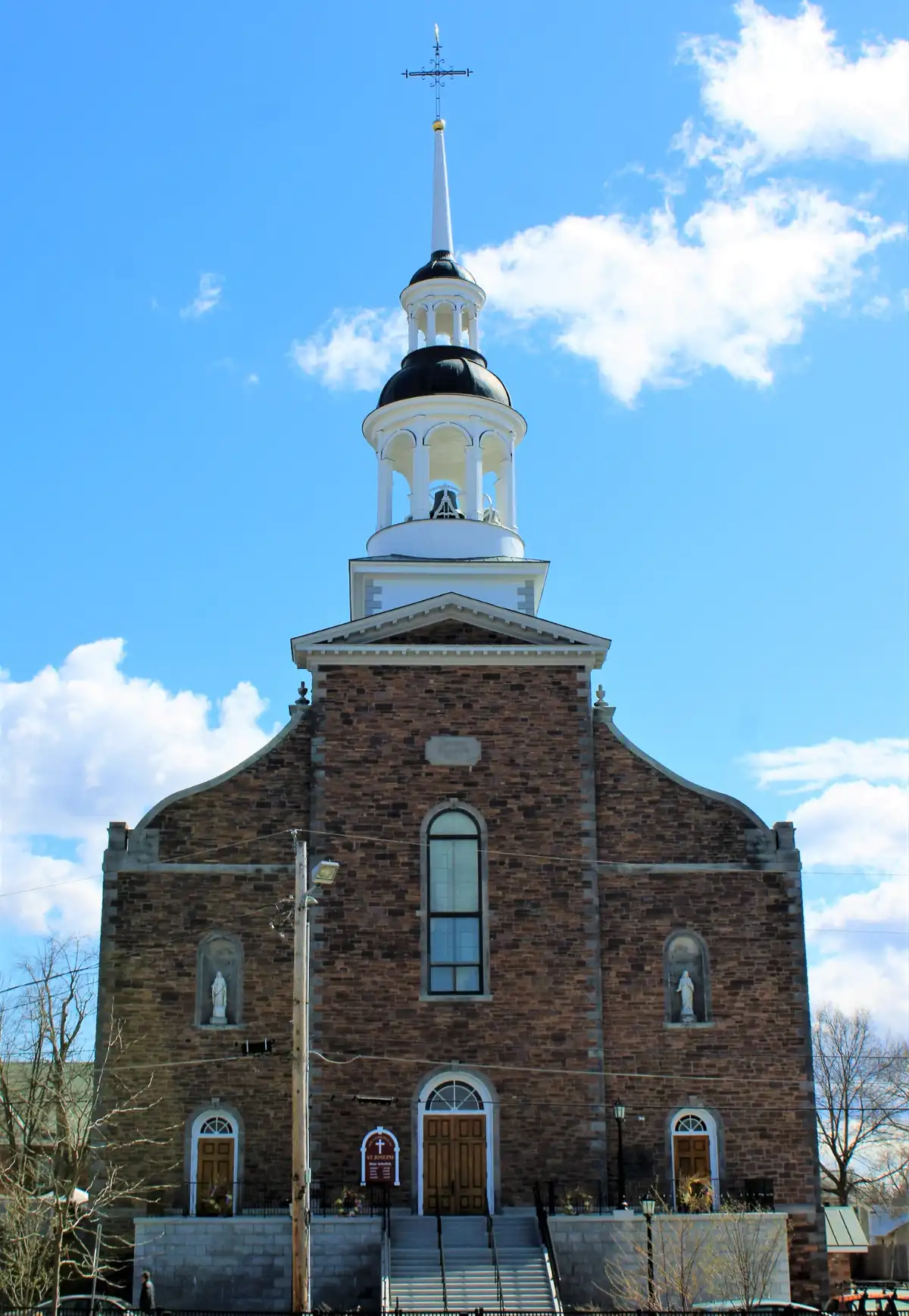
Photo: Cathedral of Saint Joseph in Burlington, Vermont, seat of the Diocese of Burlington; via Wikipedia.
Two recent developments in Vermont and Maine are highlighting very different paths Catholic clergy sexual abuse survivors may encounter when seeking compensation from a diocese.
In Vermont, a federal bankruptcy judge has authorized a committee representing abuse survivors and other creditors to pursue claims involving assets held by Catholic parishes and related trusts in the Diocese of Burlington bankruptcy.
In neighboring Maine, meanwhile, the Roman Catholic Diocese of Portland has begun reaching financial agreements with some clergy abuse survivors whose older lawsuits were effectively blocked by a 2025 Maine Supreme Judicial Court ruling.
The news from these two New England states, courtesy of BishopAccountability.org illustrate that the availability of compensation may depend not only on when abuse occurred, but also on state filing laws, bankruptcy rules, the ownership of church assets and whether a diocese chooses to negotiate claims that may no longer be legally enforceable.
Vermont Judge Allows Survivors to Pursue Parish and Trust Assets
The Roman Catholic Diocese of Burlington filed for Chapter 11 bankruptcy protection on September 30, 2024, while facing numerous clergy sexual abuse lawsuits.
On July 28, U.S. Bankruptcy Judge Heather Z. Cooper granted the Official Committee of Unsecured Creditors authority to pursue certain legal claims on behalf of the Diocese’s bankruptcy estate. The ruling does not itself award parish property to survivors. Rather, it allows the committee to bring litigation seeking to determine whether additional church assets should be available to satisfy claims.
Bankruptcy disputes involving Catholic dioceses often center on which property actually belongs to the bankrupt diocese, and which property is legally separate and therefore beyond the reach of creditors?
In Burlington, survivors’ representatives are challenging the treatment of assets associated with individual parishes and trusts. The committee has alleged that the parishes are operating parts of the Diocese rather than legally independent entities and that assets transferred into parish trusts should be available to creditors. Those allegations have not yet been finally adjudicated.
Why Parish Assets Could Matter to Vermont Survivors
For survivors, the dispute is potentially consequential because the size of the asset pool can directly affect how much money is ultimately available to fund a bankruptcy settlement.
The Diocese itself entered bankruptcy after years of clergy abuse litigation. Court reporting indicates it has previously paid approximately $34.5 million to resolve 67 misconduct claims and continues to face more than 100 additional claims.
If parish or trust assets are ultimately determined to belong to the bankruptcy estate or become part of a negotiated resolution, the amount available for survivor compensation could increase substantially.
Conversely, if those assets remain outside the estate, survivors may be limited to a smaller pool of diocesan property, insurance proceeds and other available funds.
This is one reason diocesan bankruptcy cases can become far more complicated than an ordinary civil lawsuit. Survivors are not simply litigating whether abuse occurred. They may also be competing with other creditors while lawyers determine which insurance policies, real estate holdings, investments and church-controlled entities can contribute to a settlement.
Vermont Has Eliminated the Civil Filing Deadline for Childhood Sexual Abuse Claims
Vermont law is particularly significant for survivors of older abuse.
Under 12 V.S.A. § 522, a civil action for injuries resulting from childhood sexual abuse may be brought at any time. Vermont also made the law retroactive to childhood sexual abuse occurring before July 1, 2019, regardless of the statute of limitations that applied when the abuse occurred.
That means a Vermont survivor generally should not assume that a claim is too old merely because the alleged abuse occurred decades ago.
There is, however, an important bankruptcy-related complication.
The Burlington bankruptcy court established April 4, 2025 as the deadline for survivors to timely file proofs of claim in the Chapter 11 case.
A bankruptcy claim deadline is different from a state statute of limitations. Survivors who did not file by the bankruptcy deadline may face additional hurdles even though Vermont’s underlying civil statute allows childhood sexual abuse lawsuits to be brought without a traditional limitations deadline.
Maine Survivors Face Almost the Opposite Legal Situation
The situation in Maine is strikingly different.
Maine law also says that civil actions based on qualifying sexual acts committed against minors may be commenced at any time.
But in January 2025, the Maine Supreme Judicial Court ruled in Dupuis v. Roman Catholic Bishop of Portland that lawmakers could not constitutionally revive certain claims whose statutes of limitations had already expired under previous law.
The case involved 13 plaintiffs alleging childhood sexual abuse by Catholic clergy. The court concluded that once those older claims expired, the Diocese acquired a vested right to be free from liability on them and the Legislature could not later revive them.
As a result, Maine’s current “no limitation” law does not necessarily mean that every historical childhood sexual abuse claim can now proceed.
Whether a Maine survivor has a viable lawsuit may depend on whether the claim had already expired before the law changed.
Portland Diocese Offers Payments Despite Winning Statute-of-Limitations Fight
That makes the Diocese of Portland’s latest decision unusual.
Bishop James Ruggieri announced that the Diocese had reached what it described as financial resolutions with some survivors whose allegations involved clergy sexual abuse decades ago.
The Diocese acknowledged that although some pending cases no longer had legal standing following the Maine court ruling, the passage of time did not erase the harm survivors reported.
The settlement amounts and number of participating survivors have not been publicly disclosed.
A survivor advocate quoted in Maine reporting criticized the agreements, arguing that confidential settlements could prevent disclosure of information about accused priests and the institutional response to allegations.
For survivors considering such an agreement, that raises another important issue: a financial settlement and a public accounting are not necessarily the same thing.
Settlement agreements sometimes include confidentiality provisions or releases of future claims. Survivors considering an offer may therefore want to understand exactly what rights they would give up and what information, if any, they would remain free to disclose.
Two States, Two Very Different Legal Paths
The Vermont and Maine developments demonstrate how sharply survivor options can vary even between neighboring states.
In Vermont, survivors benefit from one of the country’s broadest childhood sexual abuse filing laws, but those pursuing claims against the Burlington Diocese now must navigate a federal bankruptcy proceeding and disputes over which Catholic Church assets are available.
In Maine, meanwhile, some survivors whose claims would otherwise fall under today’s unlimited filing rule remain barred because the state’s highest court held that previously expired claims cannot constitutionally be revived.
Yet the Portland Diocese is voluntarily negotiating compensation with at least some of those survivors anyway.
That means the practical question for a survivor is not simply, “Did the statute of limitations expire?”
Other questions can matter as well:
- Is the claim subject to a revival law?
- Has a diocese filed for bankruptcy?
- Was a bankruptcy proof of claim filed by the applicable deadline?
- Are parish, school or trust assets potentially available?
- Is insurance coverage available?
- Has the institution created a voluntary compensation or settlement process?
- Would accepting an agreement require releasing additional claims?
Catholic Bankruptcy Settlements Can Reach Hundreds of Millions of Dollars
The Burlington litigation also fits into a much larger national pattern.
Catholic dioceses around the United States have increasingly turned to Chapter 11 bankruptcy after facing large numbers of childhood sexual abuse claims.
Those proceedings have produced some of the largest clergy abuse settlements in U.S. history.
For example, parishes have sometimes contributed substantial amounts to diocesan settlements even when they were not individually placed into bankruptcy. In New York, parish contributions became part of major resolutions involving the dioceses of Buffalo and Rockville Centre.
The Rockville Centre Diocese ultimately agreed to a settlement exceeding $320 million for hundreds of survivors.
You can see additional examples in our guide to the largest Catholic clergy sexual abuse settlements in the United States.
The size of previous settlements does not predict what an individual survivor will receive. Compensation can depend on the number of claims, severity and duration of alleged abuse, supporting evidence, insurance coverage, available assets and the rules established under a bankruptcy plan or settlement program.
What Survivors in Vermont and Maine Should Know
The most important takeaway from these two cases is that an old allegation is not automatically the same thing as an unavailable legal claim.
Vermont expressly permits qualifying childhood sexual abuse lawsuits regardless of how long ago the abuse occurred, although the Burlington bankruptcy created its own proof-of-claim deadline.
Maine law also contains no general limitations period for qualifying childhood sexual abuse claims, but the Dupuis ruling prevents certain claims that had already expired under older law from being revived.
Survivors should also be cautious about assuming that a diocese’s bankruptcy or even a court ruling dismissing an older lawsuit necessarily eliminates every possible avenue for compensation.
Bankruptcy trusts, insurance claims, voluntary settlements and claims against legally distinct institutions or individuals can involve separate questions.
Because those rules are highly fact-specific, survivors considering legal action may want to have an attorney determine which state law, filing deadline and institutional defendants apply to their particular circumstances.
Catholic Church Sexual Abuse Lawsuits: Understand Your Legal Options
Survivors of clergy sexual abuse may have claims against a diocese, parish, school, religious order or other Catholic institution depending on the circumstances and applicable state law. Learn more about filing deadlines, institutional liability, bankruptcy claims and compensation in our Catholic Church Sexual Abuse Lawsuit Guide.