Skip to content
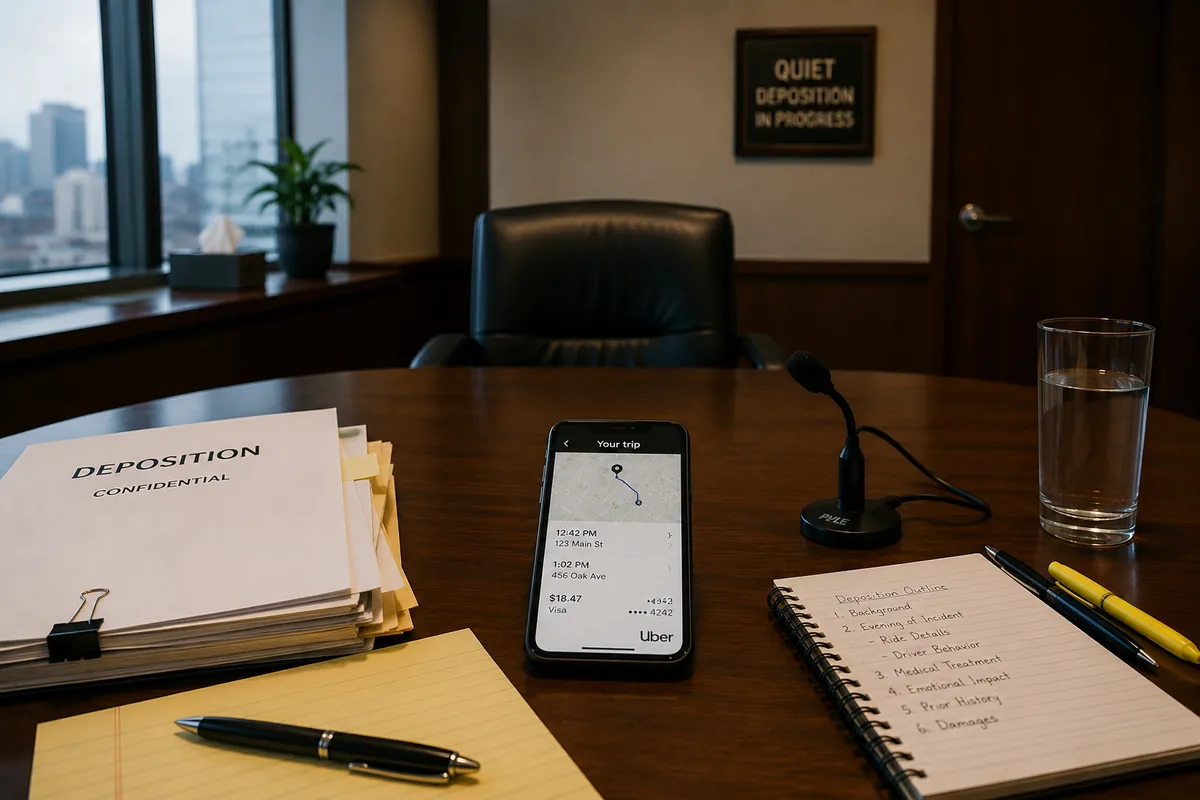
A new investigation has raised questions about the sharp contrast between Uber’s public support for sexual violence prevention and the tactics its lawyers have used while defending the company against thousands of passenger sexual assault lawsuits, Tech Times reports.
The New York Times reviewed deposition transcripts and court filings from more than a dozen cases in active discovery. According to the investigation, attorneys representing Uber questioned survivors about deeply personal subjects, including what they wore before the alleged assault, their alcohol or medication use, previous relationships, mental-health histories and childhood trauma. [Review the NYT findings via a summary by GV Wire.]
Some plaintiffs were also asked about earlier experiences of sexual abuse and other intensely private events that occurred long before the Uber ride at the center of their lawsuits.
The questioning has drawn criticism from legal scholars and survivor advocates who say the discovery process can shift attention away from the alleged conduct of the driver and Uber’s safety practices and instead place the survivor’s personal history under scrutiny.
Uber Faces Thousands of Passenger Sexual Assault Lawsuits
More than 4,000 passenger lawsuits have reportedly been filed against Uber, including nearly 4,000 cases pending in the federal multidistrict litigation known as Uber Technologies, Inc., Passenger Sexual Assault Litigation, MDL No. 3084.
The federal cases have been centralized in the Northern District of California for coordinated pretrial proceedings. Additional lawsuits are proceeding through California state courts.
The claims generally accuse Uber of failing to take adequate precautions to protect passengers, properly screen or monitor drivers, respond to complaints and warn riders about known sexual-assault risks.
Uber disputes liability and maintains that drivers are independent contractors whose intentional misconduct is outside the scope of their relationship with the company.
Lawyers Questioned Survivors About Clothing and Earlier Trauma
One deposition described in the investigation involved a Florida woman whose Uber driver had already pleaded guilty in a related criminal case and was serving a prison sentence.
While defending Uber against the woman’s civil negligence lawsuit, an attorney questioned her about her clothing, alcohol and medication use, family relationships, previous consensual encounters and earlier experiences of abuse. The survivor’s attorney eventually ended the deposition after objecting to the scope of the questioning.
Similar disputes have reportedly arisen in other cases. Uber’s attorneys have sought access to therapy records, medical histories and information about previous traumatic experiences. Friends, parents, partners and therapists have also reportedly been questioned.
Uber argues that this information may be relevant because plaintiffs are seeking compensation for emotional and psychological harm. The company’s attorneys contend that they must determine whether some portion of that harm existed before the alleged Uber-related assault.
Critics respond that the approach can make the legal process itself traumatic and discourage survivors from bringing otherwise valid claims.
Civil Lawsuits Provide Weaker Protections Against Some Questions
Federal and state rape-shield laws generally restrict the use of a sexual assault survivor’s prior sexual history in criminal proceedings. Federal Rule of Evidence 412 also applies in civil cases, but judges have more discretion to admit evidence when its value substantially outweighs the potential harm or prejudice.
Those evidentiary protections primarily govern what may be presented at trial. They do not necessarily prevent attorneys from seeking related information during pretrial discovery.
Because Uber plaintiffs commonly seek damages for emotional distress, Uber has argued that earlier trauma and mental-health treatment may be relevant to determining what caused their current symptoms.
Legal scholars interviewed for the investigation said that although defendants are entitled to investigate claimed damages, questioning survivors about extremely private matters can cross the line from legitimate fact-finding into victim-blaming or intimidation.
Uber Defends Its Litigation Strategy
Uber rejected the characterization that its lawyers are deliberately mistreating survivors.
Uber’s chief legal officer said the company’s legal team must treat survivors with compassion and dignity while also defending Uber against civil claims. Company representatives said Uber faces cases that vary substantially in their facts and credibility and has a responsibility to investigate allegations and claimed damages.
Uber’s attorneys also described questions about previous trauma as a standard part of defending personal-injury cases when plaintiffs attribute significant emotional harm to a particular event.
The company has spent more than $15 million supporting organizations that address gender-based violence and has publicly promoted survivor-centered policies. Critics say that makes the reported courtroom tactics particularly difficult to reconcile with Uber’s public messaging.
Three Trials Have Produced Widely Different Results
The investigation examined Uber’s strategy in three passenger sexual assault cases that have reached verdicts.
A California jury found Uber not liable in a 2025 trial after the company’s attorneys argued that earlier trauma contributed to the plaintiff’s emotional distress. [Read the analysis of this outcome on SurvivorsRights.com.]
In February 2026, a federal jury awarded a survivor $8.5 million in the first federal MDL bellwether trial. The jury found Uber legally responsible for the driver’s conduct but did not find that the company had negligently screened him or award punitive damages.
A second bellwether trial in North Carolina ended with a finding that the driver committed battery and a $5,000 award. Uber has challenged issues arising from both federal bellwether proceedings.
The dramatically different outcomes illustrate why individual Uber cases cannot be assigned a standard settlement value based solely on the type of allegation.
Investigation Highlights the Emotional Cost of Civil Litigation
Civil discovery can require survivors to answer difficult questions, provide records and discuss painful experiences. However, attorneys representing plaintiffs may object to overly broad requests, seek protective orders and ask judges to limit questioning that is irrelevant, unnecessarily invasive or intended primarily to harass.
The investigation highlights the importance of working with an attorney who understands both rideshare litigation and the sensitive issues involved in representing sexual assault survivors.
Survivors considering a lawsuit should understand that Uber is vigorously defending these claims. They should also know that invasive questioning is not automatically permissible merely because the company requests it. Courts retain authority to place limits on discovery and protect litigants from undue embarrassment, oppression or harassment.
Were You Harmed During an Uber Ride?
Learn about the Uber sexual assault lawsuits, the federal MDL, filing deadlines and the legal options that may be available to survivors.