Skip to content
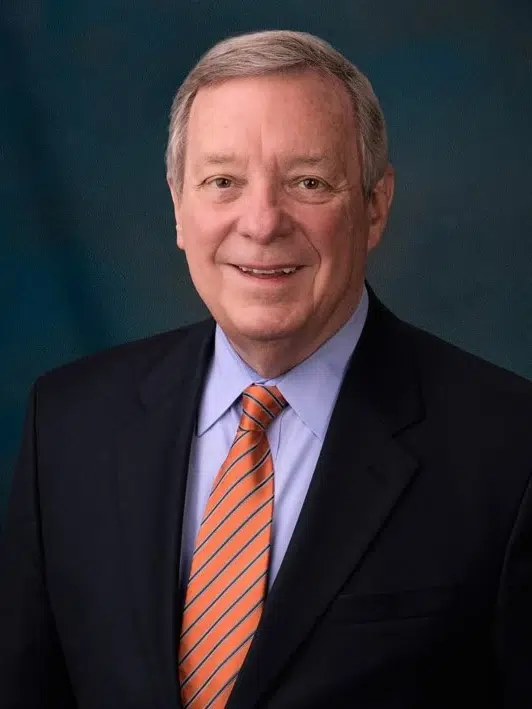
Photo credit: Sen. Dick Durbin; via public domai, Wikimedia Commons.
The U.S. Senate has opened a bipartisan investigation into child safety on Roblox, escalating government scrutiny of the enormously popular gaming platform amid allegations that predators have used it to groom, sexually exploit and abuse children, GamesIndustry.biz staff writer Sophie McEvoy reported.
Sens. Josh Hawley (R-MO) and Dick Durbin (D-IL) announced that the Senate Judiciary Committee’s Subcommittee on Crime and Counterterrorism is investigating Roblox and has demanded extensive records from the company about its handling of child exploitation, moderation, safety complaints and other risks involving young users.
In an August 12 letter to Roblox founder and CEO David Baszucki, the senators said the platform’s public claims about providing a safe environment for children warrant closer examination. They cited cases in which people accused of serious crimes allegedly made contact with children through Roblox, as well as the use of the platform for grooming, sexual exploitation and the exchange of child sexual abuse material.
The bipartisan investigation comes as Roblox already faces state lawsuits, attorney general investigations and a rapidly expanding wave of civil claims brought by survivors and families across the country.
Senators Point to Sharp Increase in Child Exploitation Reports
Roblox is particularly significant in the online child-safety debate because children make up a large portion of its audience.
According to the Senate letter, Roblox submitted 65,381 reports of suspected child sexual exploitation to the National Center for Missing & Exploited Children in 2025, more than twice the number the company reported the previous year.
The senators are examining whether Roblox’s business model and engagement strategies have taken precedence over adequate protections for young users.
The congressional inquiry does not itself establish that Roblox violated federal law. It does, however, give lawmakers the ability to seek internal records and examine what company officials knew about child-safety problems and how they responded.
That question, what did a company know, and what did it do once the risks became apparent?, also lies at the heart of many of the civil lawsuits now being brought against Roblox.
More Than 100 Child Exploitation Lawsuits Target Roblox
Private litigation against Roblox has expanded rapidly.
In December 2025, a federal judicial panel centralized nearly 80 lawsuits before a federal court in San Francisco. The cases were filed by people who say they were sexually abused or exploited as children, along with parents of affected children. Plaintiffs allege that Roblox created a platform marketed heavily toward children while failing to adequately prevent predators from finding and contacting young users.
By April 2026, Reuters reported that Roblox was facing more than 140 federal lawsuits involving child-safety allegations. Roblox has denied wrongdoing and disputes claims that it is legally responsible for criminal acts committed by third parties using its platform.
The allegations differ from case to case, but many describe a similar pattern: an adult allegedly makes initial contact with a child through Roblox, gains the child’s trust and then attempts to move the conversation to private messaging, another platform or an in-person meeting.
Those allegations remain unproven unless established through settlement or litigation.
Was Your Child Exploited or Groomed Through Roblox?
Families across the country are pursuing lawsuits alleging Roblox failed to adequately protect children from online predators, grooming and sexual exploitation.
States Are Also Suing and Investigating Roblox
The Senate investigation follows an unusually broad series of state-level actions.
Texas sued Roblox in November 2025, alleging the company misled parents about the safety of its platform and failed to adequately protect children from predators. Texas Attorney General Ken Paxton accused the company of violating state and federal child-safety laws.
Tennessee filed its own lawsuit the following month, alleging Roblox violated the Tennessee Consumer Protection Act by marketing itself as a safe place for children while failing to adequately address known risks involving predators and sexual exploitation.
Nebraska sued Roblox in March 2026. Its attorney general alleges the platform exposes children to sexual predators, violent and sexually explicit content and other dangers while providing parents with misleading assurances about safety and moderation.
Indiana sued both Roblox and Discord in May, alleging the platforms failed to adequately protect children from online predators. Arkansas followed in June with litigation against the two companies alleging they knowingly profited from systems that placed minors at risk of sexual exploitation.
Other states have chosen investigations rather than immediate lawsuits.
Connecticut opened an investigation in May examining what Roblox knew about child exploitation, whether it profited despite those risks and what steps it took to protect minors.
South Carolina issued a Civil Investigative Demand seeking information about Roblox’s moderation practices, the number of minors using the platform, advertising aimed at children and other safety issues.
Florida has taken an even more aggressive investigative approach. Its attorney general issued criminal subpoenas seeking information about alleged criminal activity involving Roblox, including evidence concerning suspected predators and victims.
States Have Already Won Millions in Roblox Settlements
Some state investigations have already resulted in significant settlements and changes to Roblox’s platform.
In April, Nevada reached an agreement worth more than $12 million that requires expanded protections for young users. Among other measures, Roblox agreed to strengthen age verification, restrict communications between adults and children, expand parental oversight and create child-specific accounts with greater content restrictions.
Days later, Alabama and West Virginia announced settlements totaling more than $23 million following their own child-safety investigations. The agreements require age verification and additional restrictions on chat features for users under 16.
The settlements do not necessarily establish liability for every allegation made against Roblox, but they demonstrate that state regulators are increasingly seeking not just financial penalties but changes to how platforms allow adults and children to interact online.
Roblox Says It Is Strengthening Child Safety
Roblox has responded to the growing scrutiny by introducing additional safeguards.
The company announced age-based accounts in 2026, including more restrictive accounts for children ages 5 through 8 and separate protections for users ages 9 through 15. Chat is disabled by default for the youngest users, and Roblox has also expanded age-estimation technology and restrictions on who younger users can communicate with.
Roblox has said it uses both trained moderation teams and automated systems to detect harmful communications, prohibits the sharing of images and videos in chat and employs filters intended to prevent users from exchanging personal information. The company acknowledges that no safety system is perfect but maintains that protecting younger users is a priority.
Critics argue that the number and severity of reported incidents demonstrate that stronger protections should have been implemented sooner.
Child-Safety Groups Have Also Asked the FTC to Act
Congress is not the only federal institution facing pressure to examine Roblox.
In May, child-safety advocacy organizations asked the Federal Trade Commission to investigate the company, alleging that Roblox uses potentially manipulative design and monetization practices while inadequately protecting young users from harmful interactions.
The complaint urged the FTC to scrutinize both child safety and whether Roblox’s marketing and business practices violate federal consumer-protection laws.
As of August 18, however, the publicly confirmed federal investigation is the Senate Judiciary subcommittee inquiry. An FTC complaint asking the agency to investigate is not the same thing as confirmation that the FTC has opened an enforcement investigation.
Why the Roblox Investigation Matters for Survivors and Families
The growing litigation against Roblox represents part of a broader shift in how courts and regulators are examining online child exploitation.
Traditionally, criminal cases have focused primarily on the individual predator who groomed or abused a child. The emerging lawsuits ask a second question:
Can the platform that connected a predator with a child also be held responsible when plaintiffs allege it knew its systems were being exploited and failed to take reasonable steps to prevent foreseeable harm?
That issue is now being tested in hundreds of claims involving Roblox and other technology companies.
For survivors, these cases may also provide access to information that would otherwise remain inside a corporation. Through civil discovery and government investigations, internal communications, safety reports, moderation data and prior complaints can potentially shed light on what a company knew about dangerous activity on its platform and when it knew it.
The Senate investigation could add another layer of scrutiny.
Hawley and Durbin have demanded records concerning child sexual exploitation, safety policies and Roblox’s response to reports of abuse. The results could help lawmakers determine whether additional federal protections are needed, while potentially providing a much clearer picture of how extensively Roblox understood the risks facing children on its platform.
For families whose children were groomed, sexually exploited or abused after meeting someone through Roblox, the widening investigations and litigation also underscore that these incidents are increasingly being examined not simply as isolated crimes by individual offenders, but as part of a larger debate over corporate responsibility for protecting children online.