Skip to content
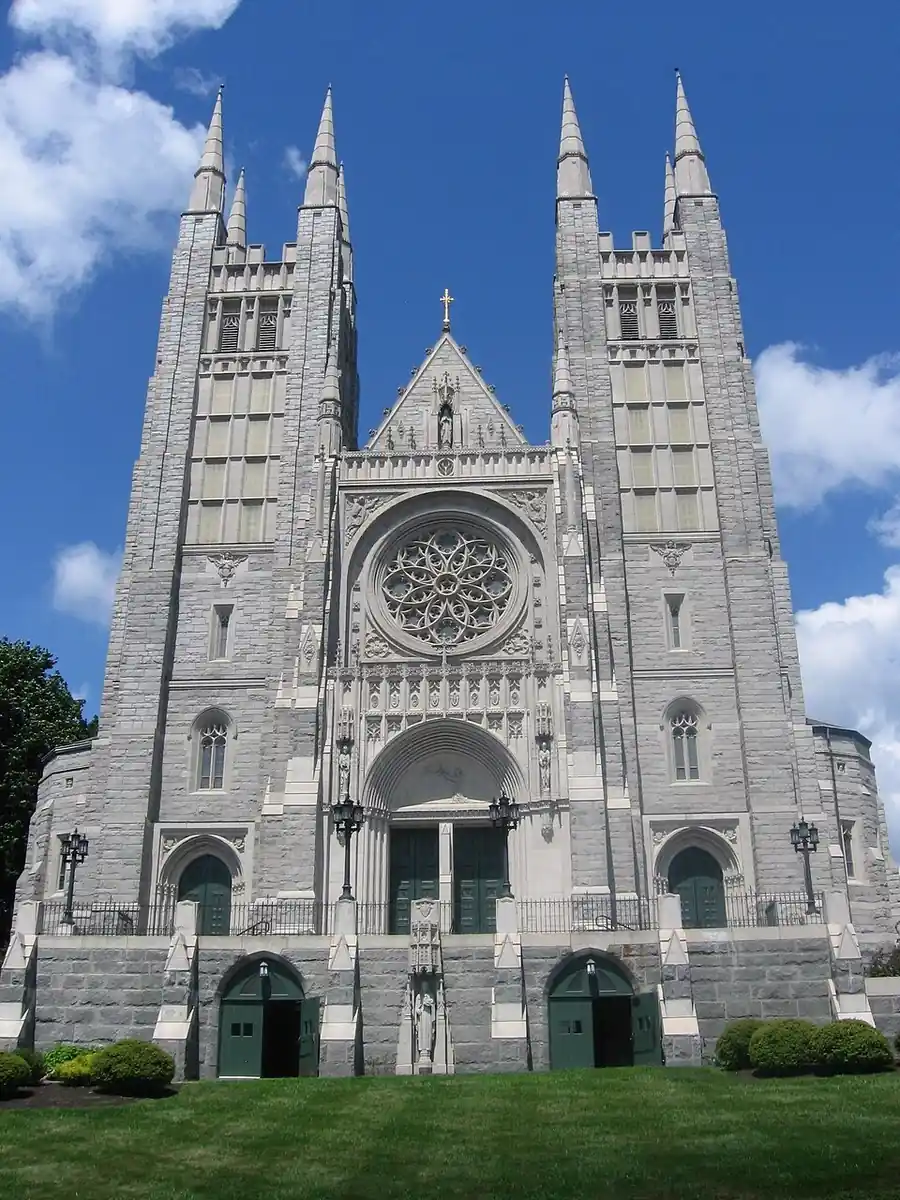
Photo: Basilica of Saints Peter and Paul, Lewiston; via Wikimedia Commons.
The Roman Catholic Diocese of Portland has reached settlements involving more than 100 people who reported being sexually abused as children by clergy and other church representatives in Maine, the Portland Press Herald reported.
The agreements resolve a significant number of claims following years of litigation over whether survivors whose allegations dated back decades could pursue lawsuits under a Maine law that attempted to revive previously expired claims.
Roughly half of the claims were resolved through a combined seven-figure payment, although the total amount and individual settlement amounts were not disclosed.
For some survivors, however, the settlements have not provided everything they were seeking.
Several people who resolved claims said publicly that they still want a direct apology from the diocese.
Survivors Say Settlements Do Not Replace an Apology
One survivor told the Portland Press Herald that he was sexually abused by a priest at St. Bruno Parish in Van Buren when he was 6 years old.
The survivor said the abuse and its aftermath affected his relationship with his family and faith for years. Although he ultimately participated in the settlement process, he said financial compensation was never his primary objective.
What he wanted, he said, was acknowledgment and an apology.
Other survivors expressed similar sentiments, demonstrating a recurring issue in institutional sexual abuse cases: monetary compensation can provide accountability and assistance, but survivors may also seek acknowledgment of what happened and recognition of the institution’s role.
The Diocese of Portland addressed the settlements in a statement issued by Bishop James Ruggieri in July. The bishop said the financial resolutions were intended to acknowledge the seriousness of the reported abuse and its lasting effects. He also said the diocese would continue investigating reports of sexual abuse regardless of when the alleged misconduct occurred.
The diocese’s public statement expressed concern for people who suffered abuse but did not contain the type of direct institutional apology some survivors have requested.
Maine Supreme Court Ruling Limited Older Abuse Lawsuits
The settlements come against the backdrop of an important and controversial change in Maine law.
In 2021, Maine lawmakers enacted legislation allowing civil lawsuits based on childhood sexual abuse to be brought regardless of how long ago the alleged abuse occurred. The change opened the courthouse doors to some survivors whose claims had previously expired under older statutes of limitation.
The Roman Catholic Bishop of Portland challenged the retroactive application of that law.
In January 2025, the Maine Supreme Judicial Court ruled in Dupuis v. Roman Catholic Bishop of Portland that the state could not constitutionally revive claims for which the previous statute of limitations had already expired. The court concluded that defendants had acquired a vested right to the statute-of-limitations defense once those claims became time-barred.
The ruling did not reinstate a statute of limitations for all childhood sexual abuse lawsuits in Maine. Rather, it affected older claims that had already expired before the Legislature attempted to revive them.
That distinction is important for survivors evaluating whether they may still have a viable claim.
Some Survivors Still Had Legally Viable Claims
Not every person participating in the settlements had a claim barred by the Maine Supreme Judicial Court ruling.
Some allegations were recent enough that they remained legally actionable under Maine law. Others appear to have been resolved outside of pending civil litigation.
Amato, for example, reportedly had not filed a lawsuit against the diocese before reaching his settlement.
Another survivor had been among the first people to sue the Roman Catholic Bishop of Portland after Maine enacted its 2021 law.
The survivor alleged that he was sexually abused by a priest in 1961 when he was 12 and working part-time at St. Joseph Church in Old Town. His case ultimately became part of the litigation that reached Maine’s highest court.
He has now resolved his claim with the diocese.
Sexual abuse claims involving churches can raise complicated questions about filing deadlines, institutional responsibility and whether an older claim can still be pursued.
Learn more:
Catholic Church sexual abuse lawsuits, survivor rights and potential legal options.
Not Every Survivor Chose to Settle
Some people with allegations against the diocese have declined settlement offers.
A survivor who grew up in Maine and now lives in Arizona told the Press Herald that he chose not to settle because he wants to continue speaking publicly about clergy sexual abuse.
That illustrates another important point about institutional abuse litigation: survivors do not necessarily have the same goals.
For some, a settlement may provide closure, compensation or recognition after decades of silence. Others may prioritize having their allegations heard publicly, obtaining documents through litigation or continuing to press an institution for broader accountability.
There is no single outcome that represents justice for every survivor.
How The Settlement Impacts Survivors
The Maine settlements demonstrate both the possibilities and the limitations of civil sexual abuse claims.
More than 100 people came forward with allegations involving clergy and church representatives, and many ultimately received financial settlements. Yet some survivors whose claims were affected by Maine’s 2025 Supreme Judicial Court ruling lost the legal mechanism that lawmakers had attempted to give them.
The case also highlights why statutes of limitation matter so much in childhood sexual abuse cases. Survivors frequently do not disclose abuse or fully understand its effects until many years or even decades later. The Maine Supreme Judicial Court acknowledged society’s increased understanding of delayed disclosure and trauma while nevertheless concluding that previously expired claims could not constitutionally be revived under Maine law.
For survivors, the practical lesson is that the date of the abuse does not necessarily answer whether a legal claim is available. Filing rules differ substantially from state to state, and they continue to change through legislation and court decisions.
Anyone considering a claim involving clergy sexual abuse may therefore want to determine their legal options even if the abuse occurred many years ago.
Related:
Portland, ME Diocese Reaches Settlements With Clergy Sexual Abuse Survivors Despite Court Ruling