Skip to content
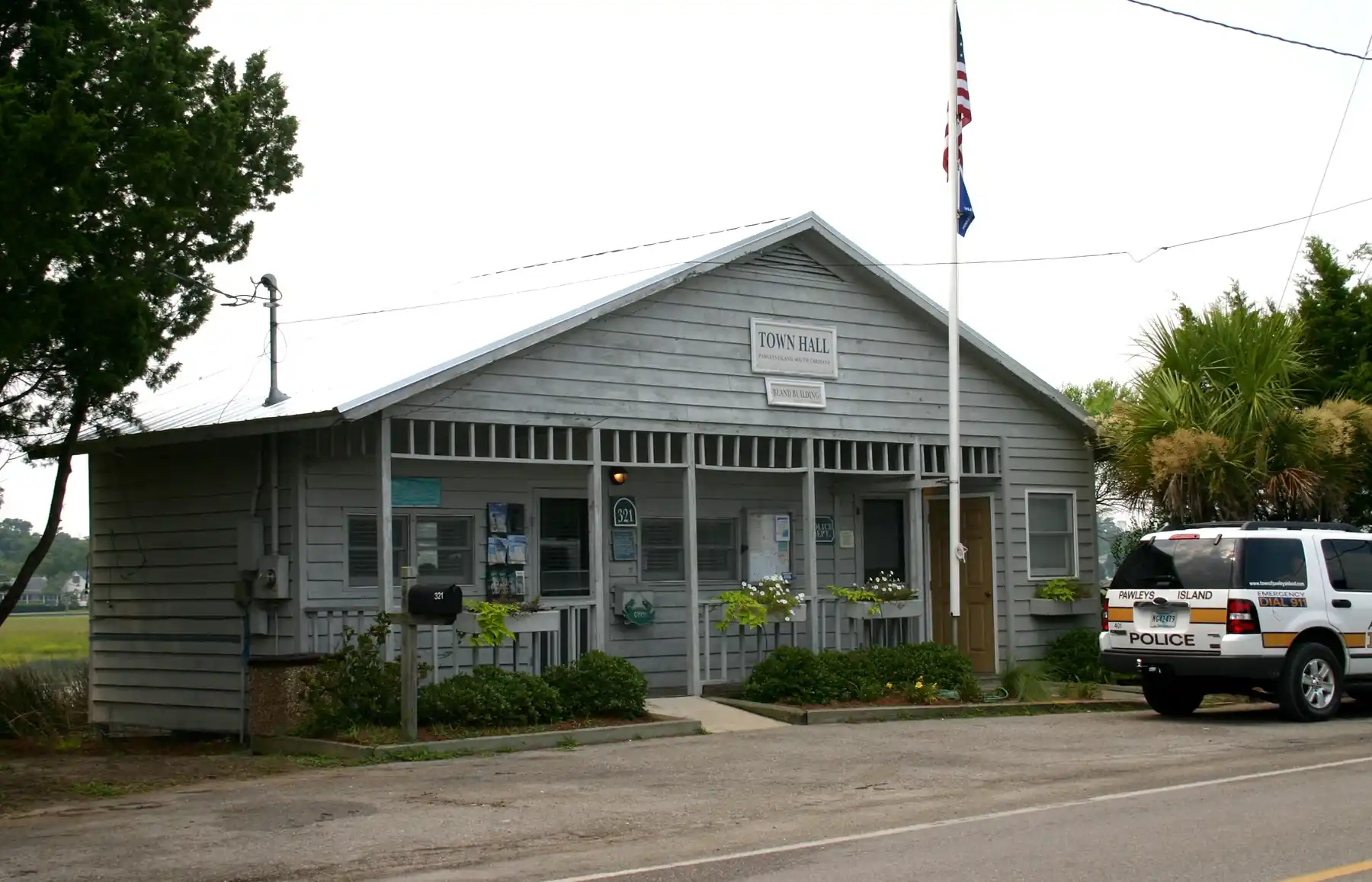
Photo: Pawleys Island Town Hall in South Carolina, via Wikipedia.
The Southern Baptist Convention has been named as a defendant in a new federal class-action lawsuit involving allegations that a registered sex offender was allowed extensive access to children at a South Carolina church and Christian academy, according to reporting by Roys Report.
The lawsuit, filed in federal court in South Carolina, also names the SBC Executive Committee, Pawleys Island Community Church, Pawleys Island Christian Academy, former church and school leaders, and registered sex offender Warren Spence Perry. It is the sixth civil lawsuit connected to the case and the first filed in federal court.
The complaint was brought by parents identified as John and Jane Doe and their minor child. It seeks class-action status and alleges that more than 100 people could ultimately fall within the proposed class.
Importantly, the lawsuit does not seek damages for sexual abuse itself. Instead, it focuses on allegations that children were exposed to an unsafe environment and that parents paid tuition without being told about Perry’s criminal history and access to campus. Any individual sexual-abuse claims would be pursued separately.
Lawsuit Alleges Church Leaders Knew About Sex-Offender Status
Perry, 70, previously pleaded guilty in 2023 to third-degree sexual exploitation of a minor and was required to register as a sex offender.
According to the lawsuit, Perry nevertheless performed volunteer, custodial or maintenance work at Pawleys Island Community Church and its academy, allegedly giving him frequent access to children.
The complaint alleges that church and academy leaders knew about Perry’s criminal history but failed to disclose it to parents, teachers or authorities. It also alleges that former senior pastor Don Williams provided a character reference to probation officials on Perry’s behalf.
The lawsuit further claims that after a teacher raised concerns about Perry’s sex-offender status, church leadership failed to adequately respond and instead marginalized or silenced the teacher.
Those allegations have not been proven in court.
SBC and Executive Committee Added as Defendants
The lawsuit names both the national Southern Baptist Convention and its Executive Committee, arguing that the relationship between the SBC and Pawleys Island Community Church creates potential legal responsibility.
The SBC has long maintained that individual Southern Baptist churches are autonomous. The South Carolina Baptist Convention has similarly said it does not exercise authority over cooperating churches or their leaders.
The federal lawsuit challenges how far that independence extends when questions of institutional responsibility, oversight and child safety are involved.
SBC Executive Committee President and CEO Jeff Iorg said the organization does not comment on pending litigation and would review the complaint and respond appropriately.
Criminal Investigation Followed Arrests of Church Leaders
The federal case follows the July arrests of Perry and three former church or school leaders.
Former senior pastor Don Williams, his wife Ginny Williams, and former academy director Jennifer “Niki” Howard resigned from their positions before they were arrested. Williams and Howard face charges that include obstruction of justice, criminal conspiracy and unlawfully placing a child at risk, while Ginny Williams and Perry face obstruction and conspiracy charges.
Authorities began investigating after receiving a parent complaint in July. Perry allegedly worked around the church academy and daycare, which served roughly 300 students, despite restrictions associated with his sex-offender status.
As of the latest reporting, authorities had not announced a new sexual-abuse charge involving a child at the church or academy, and the federal complaint does not allege that Perry sexually abused any of the children who attended the school.
The criminal investigation remains ongoing.
Why This Lawsuit Matters for Survivors
For survivors and families, one of the most important aspects of the Pawleys Island litigation is the distinction between exposure to an allegedly unsafe environment and an individual sexual-abuse claim.
The class action seeks relief on behalf of families who allegedly were not informed that a registered sex offender had access to children on campus. But the complaint expressly preserves the ability of any individual who alleges sexual abuse to pursue a separate claim.
That distinction matters because an individual survivor’s potential lawsuit could involve different damages, evidence and filing deadlines.
The case also highlights a broader issue that frequently appears in institutional sexual-abuse litigation: liability may extend beyond the individual accused of misconduct. Depending on the facts, a civil case can examine whether church or school officials knew about a risk, failed to disclose important information, inadequately supervised an individual, ignored complaints, or failed to take reasonable measures to protect children.
South Carolina Filing Deadlines Can Matter in Older Abuse Claims
South Carolina currently gives survivors of childhood sexual abuse a specific extended period for bringing civil claims.
Under South Carolina Code § 15-3-555, a civil action arising from sexual abuse or incest generally must be filed within six years after the survivor turns 21 or within three years after the survivor discovers both the injury and its connection to the abuse, whichever is later.
That means a survivor should not necessarily assume that a claim is barred simply because the alleged abuse happened many years ago. At the same time, South Carolina has not created the kind of broad revival window available in some other states, so the dates and discovery circumstances can be extremely important.
Anyone who believes they experienced sexual abuse connected to a church, school or other institution should have the applicable deadline evaluated based on the specific facts of the case.
Federal Case Adds to Continuing Scrutiny of Southern Baptist Abuse Response
The Pawleys Island lawsuit arrives amid continuing scrutiny of how Southern Baptist institutions respond to sexual-abuse allegations and child-safety concerns.
In recent years, survivors and advocates have repeatedly raised questions about whether the denomination’s decentralized structure makes it more difficult to identify patterns of misconduct and impose consistent safeguards across affiliated churches.
The new lawsuit could test a related legal question: when, if ever, can national or denominational entities bear responsibility for alleged failures occurring within an autonomous local congregation?
The answer will ultimately depend on the facts, the relationships between the organizations, and how the federal court applies South Carolina and federal law.
Were You Sexually Abused in a Southern Baptist Church or Ministry?
Survivors of sexual abuse connected to churches, schools and other Southern Baptist ministries may have legal options against the individual accused of abuse and, depending on the circumstances, institutions that allegedly failed to protect them.
Learn more about Southern Baptist sexual abuse lawsuits and your legal options →