Skip to content
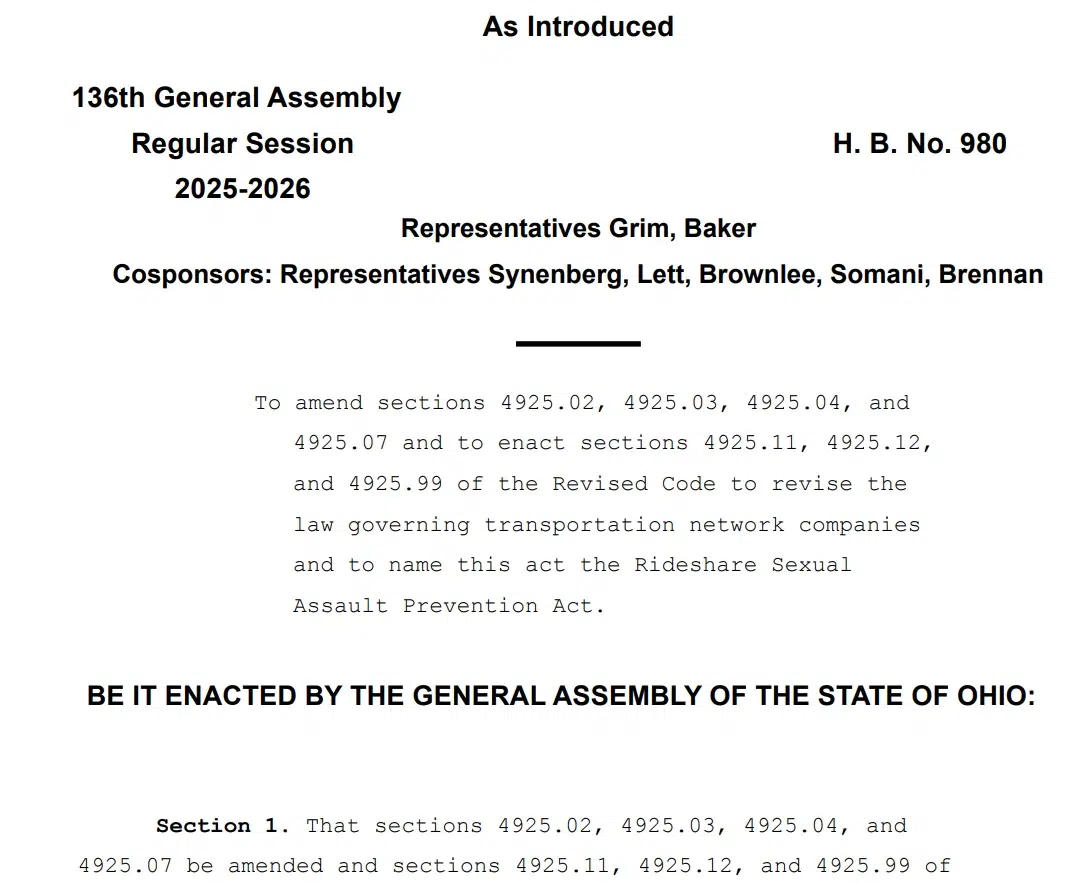
Ohio lawmakers are considering new regulations for Uber, Lyft and other rideshare companies aimed at reducing sexual assault risk and increasing accountability when riders report misconduct, Daniel Zivian of WKRC reported
House Bill 980, known as the Rideshare Sexual Assault Prevention Act, would impose additional requirements involving driver background checks, complaint reviews and the information rideshare companies provide to state regulators. The Ohio Legislature currently lists the measure as introduced.
The proposal comes amid continuing scrutiny of how rideshare companies screen drivers, respond to sexual misconduct reports and disclose safety information to regulators and the public.
What Would Ohio H.B. 980 Require?
According to reporting on the proposed legislation, rideshare companies would be required to conduct a background check before allowing a driver onto the platform and then repeat the screening every six months.
The bill would also require companies to review a driver’s eligibility within seven days after receiving certain complaints.
Other provisions would increase reporting to the Public Utilities Commission of Ohio and prohibit rideshare companies from improperly deleting or falsifying driver ratings.
Primary co-sponsor of the bill, State Rep. Rachel Baker, said the legislation was prompted in part by national reporting about sexual assaults involving rideshare services and by regulatory changes adopted in other states.
For riders, the significance of those provisions extends beyond initial driver screening. A system that requires a prompt review after a serious complaint could potentially reduce the period during which a driver accused of misconduct remains eligible to transport additional passengers.
Why Complaint Response Times Matter for Survivors
One of the most important parts of H.B. 980 from a survivor-safety standpoint may be the proposed seven-day complaint-review requirement.
Sexual assault lawsuits against rideshare companies have increasingly focused not only on the actions of individual drivers, but also on what companies allegedly knew about safety risks and how they responded to previous reports.
A survivor pursuing a civil claim may therefore encounter questions such as whether the company previously received complaints about a driver, whether the driver continued using the platform afterward and whether reasonable safety measures could have prevented a subsequent assault.
The Ohio proposal does not determine whether Uber, Lyft or another company would be legally responsible in an individual case. But creating clearer complaint-handling requirements could produce records that become important when courts later evaluate a company’s safety practices.
Ohio Proposal Comes Amid Wider Uber and Lyft Sexual Assault Litigation
The legislation arrives as rideshare companies continue to face litigation around the country involving allegations of passenger sexual assault.
Those cases frequently allege that rideshare platforms failed to implement sufficient screening, ignored known risks, inadequately responded to complaints or marketed their services as safer than their actual practices justified.
A civil case may potentially involve claims against the person accused of committing the assault, the rideshare platform, or other responsible parties depending on the circumstances and applicable state law.
Uber-related sexual assault litigation has also resulted in coordinated federal proceedings involving large numbers of claims, underscoring that rideshare assault allegations are not limited to isolated incidents.
Uber Sexual Assault Lawsuits: Learn About Claims, Settlements and Legal Options
Survivors who experienced sexual assault involving an Uber driver may have questions about company liability, evidence, filing deadlines and compensation. Learn more in our Uber Sexual Assault Lawsuit Guide.
What H.B. 980 Could Mean for Ohio Rideshare Passengers
If enacted, H.B. 980 would create more direct state oversight of several safety practices that have historically been controlled primarily by the rideshare companies themselves.
For survivors and passengers, the proposal could potentially have several practical effects, including:
- more frequent checks of a driver’s criminal background;
- faster review after a serious rider complaint;
- additional documentation of company responses to safety reports;
- greater regulatory access to rideshare safety data; and
- preservation of driver-rating information that could become relevant to future investigations or lawsuits.
The legislation would also allow the Public Utilities Commission of Ohio to process complaints involving rideshare companies.
Lyft said it considers safety a critically important issue and plans to work with lawmakers as H.B. 980 moves through the legislative process. Uber had not publicly responded to the news report at the time it was published.
Ohio Sexual Assault Lawsuit Deadlines Can Be Short
Rideshare safety legislation and a survivor’s ability to pursue compensation are separate legal issues.
Ohio currently imposes a one-year limitations period for many civil assault or battery claims, although different rules can apply depending on the circumstances, including when the identity of the alleged perpetrator became known.
Claims involving childhood sexual abuse are treated differently. Under current Ohio law, many civil claims arising from childhood sexual abuse must generally be brought within 12 years after the survivor reaches the age of majority, with certain exceptions and tolling provisions.
Because rideshare sexual assault cases can potentially involve negligence or other claims in addition to a direct assault claim, the filing deadline applicable to a particular survivor can depend on the specific legal theory, the defendants involved and the facts of the incident.
Survivors should therefore avoid assuming that a single Ohio deadline automatically applies to every rideshare assault lawsuit.
Evidence May Become More Important Under Proposed Safety Rules
The proposed legislation also highlights why preserving evidence soon after a rideshare incident can be important.
Depending on the circumstances, relevant evidence may include the rider’s trip receipt, driver’s name and profile, vehicle information, screenshots from the app, communications with Uber or Lyft, complaint records, police reports, medical documentation and correspondence showing how the rideshare company responded.
Company records may also reveal whether earlier complaints were made about the same driver.
If Ohio eventually requires companies to complete formal reviews within seven days of certain complaints, those records could potentially provide another source of evidence regarding what the company knew and when it acted.
Legal Options for Ohio Rideshare Sexual Assault Survivors
H.B. 980 is a proposed safety law. Survivors do not need to wait for the legislation to pass before asking whether they currently have legal options.
Someone who experienced sexual assault during an Uber, Lyft or other rideshare trip may be able to pursue compensation depending on the facts of the case and the applicable statute of limitations.
Potential claims can involve allegations of negligent hiring or screening, inadequate safety procedures, failure to respond appropriately to prior complaints or other theories of corporate responsibility.
Because Ohio filing deadlines can be especially important in adult sexual assault cases, survivors considering legal action may want to determine promptly which deadline applies to their circumstances.