Skip to content
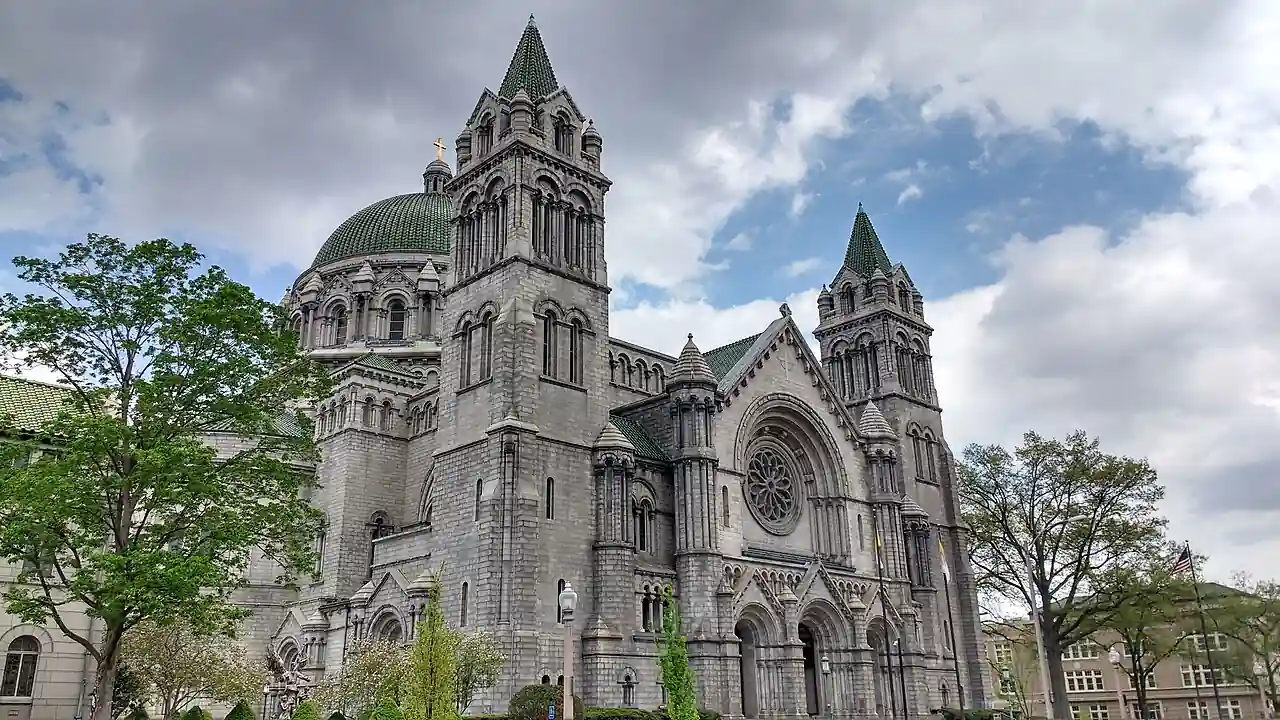
Photo: Cathedral Basilica of Saint Louis; via Wikipedia.
The Archdiocese of St. Louis has filed a motion asking a Missouri state court to dismiss several claims in a lawsuit that alleges decades of sexual abuse of minors by clergy, religious staff, employees, and others connected to the archdiocese, OSV News reported Wednesday.
The motion, filed on December 23, challenges key portions of a civil lawsuit brought by multiple survivors who say they were abused as children while under the care of Catholic institutions in Missouri. The case is currently pending in the 22nd Judicial Circuit Court in St. Louis, where Judge Christopher E. McGraugh has agreed to pause proceedings until March 26, noting that the parties remain “in the early stages of discovery.”
A spokesperson for the Archdiocese declined to comment on the substance of the case, stating, “We are unable to provide additional information or comments regarding ongoing legal proceedings.”
Lawsuit filed by 25 survivors
The lawsuit was originally filed in July 2024 by 25 plaintiffs, all of whom were minors living in Missouri at the time of the alleged abuse. The plaintiffs are identified only by their initials in court filings.
The named defendants include the Archdiocese of St. Louis, Archbishop Mitchell T. Rozanski, and a priest identified as “John Doe I,” referred to in the complaint as “Father Joe,” who served at St. Ambrose Catholic Church in St. Louis. Several plaintiffs have stated that they expect to learn the full identities of their abusers during the discovery phase of the case, as many only remember first names or religious titles.
Court filings specify that Archbishop Rozanski is being sued “solely in his capacity as an officer, director and/or chief executive officer of the Archdiocese of St. Louis,” with the term “Archbishop” applying broadly to “all Archbishops who officially supervised or failed to supervise the employee abusers set forth herein.”
The complaint includes detailed allegations of sexual abuse spanning from the 1950s through the years after 2010. It asserts ten separate causes of action, including childhood sexual abuse, negligence, failure to supervise, fraud, aiding and abetting, and intentional infliction of emotional harm.
Archdiocese challenges liability
In its December motion, the Archdiocese asked the court to dismiss multiple claims, arguing that the lawsuit improperly combines allegations against numerous unnamed individuals without naming the alleged abusers as defendants.
“Twenty-five Plaintiffs assert ten separate causes of action arising from childhood sexual abuse allegedly committed by approximately twenty-five individuals, many of which are unknown to the Plaintiffs, spanning over sixty-eight years — yet not one of the alleged perpetrators is a defendant here,” the Archdiocese stated in its filing. “Instead, Plaintiffs sued the Archdiocese and Archbishop Rozanski, who did not even assume his role until a decade after the last alleged incident.”
The Archdiocese is asking the court to dismiss claims related to childhood sexual abuse, negligent failure to supervise or report abuse, negligence per se, breach of special duty, fraud, conspiracy, aiding and abetting, and intentional infliction of emotional distress. The motion relies heavily on Missouri law and past court rulings to argue that institutions and supervisors cannot be held liable for abuse committed by individual perpetrators.
“Missouri courts have long held that claims for childhood sexual abuse cannot be brought against nonperpetrators,” the Archdiocese wrote.
The motion further claims that negligence based lawsuits against religious institutions are constitutionally barred, asserting that courts cannot evaluate how churches supervise clergy, manage internal policies, or disclose information without violating First Amendment protections.
“Each of these claims requires the Court to evaluate how the Archdiocese should have supervised clergy or church personnel, managed internal policies, protected parishioners, or disclosed information regarding ministerial assignments — all of which are matters off limits to civil courts,” the filing states.
The court has not yet ruled on the Archdiocese’s request to dismiss the claims.