Skip to content
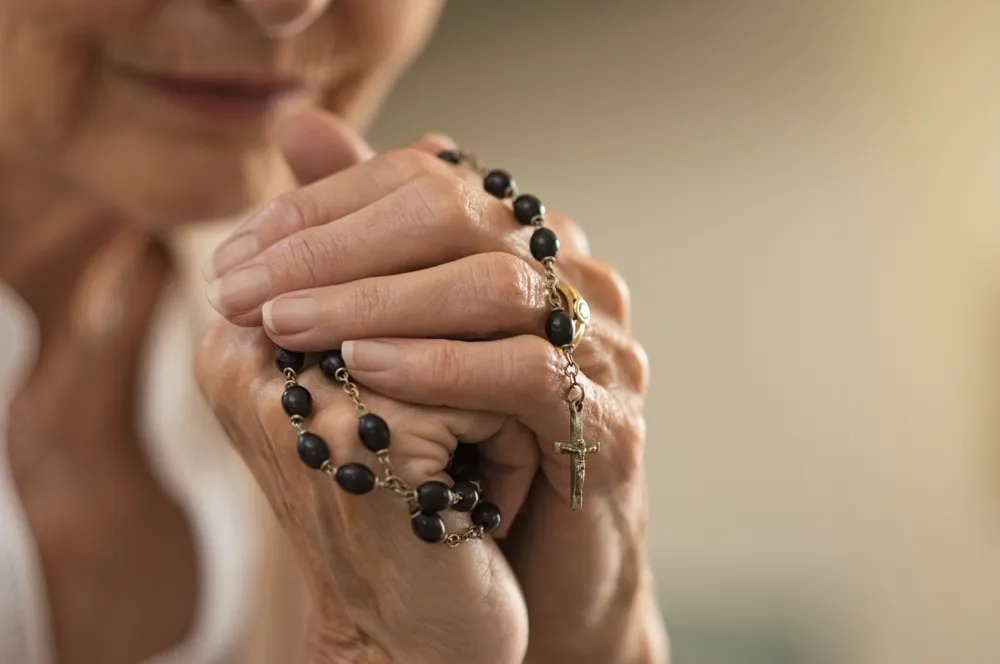
Writing in Tablet Magazine, Maggie Phillips reports that U.S. Catholics continue to disaffiliate from the Church at record rates, driven in large part by the nationwide legacy of mass child abuse committed by pedophile clerics. Phillips notes that what once dominated national headlines now lives on primarily in the shattered lives of the survivors and the accelerating collapse of institutional trust.
Phillips cites advocates who say that even as decades of abuse are well-documented, survivors continue to face barriers to healing, redress, and acknowledgment. One advocate emphasized that many survivors remain “locked in a legal morass for years,” denied long-term support and even basic recognition of the harm they endured. Phillips underscores that disaffiliation is happening against the backdrop of thousands of credible allegations, billions paid out, and a culture of secrecy survivors say still persists.
According to Phillips, the data is overwhelming. Citing the University of Notre Dame’s Church Life Journal, she writes that the Catholic Church is “losing nine out of ten cradle Catholics” by weekly Mass attendance measures. Phillips adds that Pew Research found the Church loses 8.4 cradle Catholics (raised in the faith from birth rather than a convert) for every one convert. She notes that commentators inside the Church often blame cultural trends or poor catechesis, but survivors and their advocates insist the real through line is the unresolved trauma caused by the abuse crisis and the Church’s longstanding attempts to contain it.
Phillips references the Center for Applied Research in the Apostolate (CARA), which reported more than 16,000 credible allegations in U.S. dioceses, most occurring before 1989. She writes that these institutions have paid out more than $5 billion to survivors to date. Even with declining new allegations, Phillips stresses that the historic scale of violence continues to shape Catholic life, survivors’ well-being, and public trust.
Phillips points to national consequences. She highlights an Axios report predicting that Catholic churches will be heavily represented among the 15,000 U.S. church closures projected this year, driven in part by bankruptcy filings linked to sexual abuse settlements. As Phillips explains, 37 Catholic entities have sought bankruptcy protection since 2004. When states like Maryland and New York revived expired claims, dioceses again turned to Chapter 11. Phillips notes that the Archdiocese of Baltimore now plans to eliminate nearly two-thirds of its parishes, while closures are unfolding across New York as well.
Phillips also quotes commentary from JD Flynn, who reflected that initial calls for transparency and justice during the 2018 Archbishop Theodore McCarrick scandal quickly gave way to ideological infighting, sidelining survivor voices. Phillips uses Flynn’s reflection to illustrate how survivors’ experiences are often recast, minimized, or politically weaponized instead of confronted directly.
Phillips highlights the work of the Sisters of the Little Way, a community seeking to build a religious institute centered on supporting survivors of abuse within the Church. Through their podcast and interviews, these women describe their own experiences of grooming and spiritual harm. Phillips reports their view that many ex-Catholics’ stated reasons for disaffiliation, such as losing belief in God, often have unacknowledged roots in abuse or institutional betrayal.
Referencing research by Stephen Bullivant, Phillips notes that younger Catholics often have only a distant awareness of the scandals. But rather than signaling recovery, Phillips explains that this “outsider’s detachment” reflects a generational erosion of religious transmission: parents and grandparents disillusioned by abuse were unable to hand down a faith they no longer trusted.
Phillips writes that even practicing Catholics increasingly struggle with whether they can pass the faith on to their own children. Survivors interviewed by Phillips report experiences of unbelonging, isolation, and communities unwilling to acknowledge their trauma. Phillips emphasizes their recurring description of being dismissed, gaslit, or scapegoated to protect the institution rather than the vulnerable.
She also cites additional testimony from religious sisters who argue that real accountability must include transparency, institutional reform, and a survivor-centered approach. According to Phillips, they describe an entrenched pattern of silence and self-protection that cannot be undone by policy changes alone.
Phillips again turns to survivors and advocates in New York, where groups fighting widespread parish closures argue that survivors are exhausted by continual barriers to justice. One spokesperson told Phillips that communities remain deeply frustrated by diocesan efforts to restrict liability while expecting parishioners to fund settlements for harms they never caused.
Throughout her analysis, Phillips shows that the crisis facing Catholicism is not merely demographic or cultural. It is, she argues, a direct consequence of institutional failures toward the survivors whose trust was violated and whose suffering continues to echo across generations. As Phillips concludes, the Church created countless lost sheep by ignoring abuse within its flock. Its ongoing reluctance to fully confront that history may drive away many of those who stayed.
Were You Harmed in a Catholic Church or School Setting?
If you or someone you love is a survivor of clergy sexual abuse, you may still have legal options. Learn how survivors nationwide are pursuing justice and holding Catholic institutions accountable.
Read our Catholic Church Sexual Abuse Lawsuit Guide to understand your rights. If you are ready to explore your legal options, you can request a free, confidential case review by completing the secure form below.