Skip to content
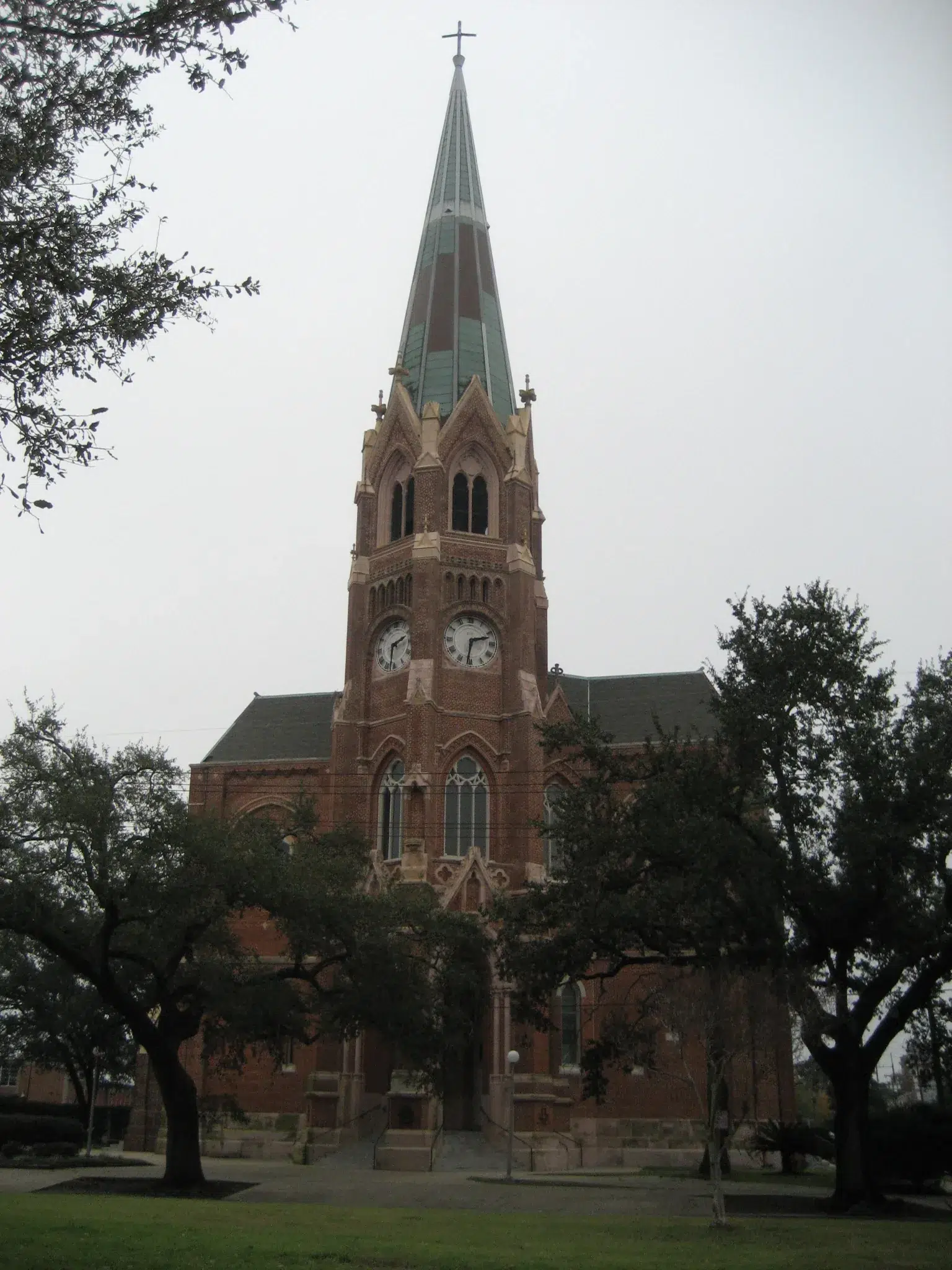
Photo: St. Stephen Church in New Orleans, Louisiana; by Infrogmation of New Orleans, CC BY-SA 3.0, via Wikimedia Commons.
Survivors of clergy sexual abuse in the Archdiocese of New Orleans are finally learning how much they may receive from a $305 million bankruptcy settlement approved last December, according to reporting by Ramon Antonio Vargas and David Hammer of WWL Louisiana, published by The Guardian.
For many, the numbers have brought more anger than closure.
Letters sent to hundreds of survivors this week show that even a claimant receiving the maximum possible score under the settlement’s 100-point system is currently estimated to receive about $641,426.
That amount is far below what some survivors might have recovered outside bankruptcy court.
A Louisiana jury, for example, awarded $2.4 million to a childhood sexual abuse survivor in June 2025. More recent settlements involving Catholic institutions outside the Archdiocese of New Orleans bankruptcy have reportedly reached comparable amounts.
The difference has renewed criticism of the bankruptcy process and whether it forces survivors to accept substantially less compensation in exchange for resolving hundreds of claims against an institution at once.
Survivors Were Assigned Points Based on Their Abuse
The Archdiocese of New Orleans filed for Chapter 11 bankruptcy protection in 2020 as it faced mounting clergy sexual abuse claims.
After years of litigation and negotiation, the archdiocese and its insurers agreed in December 2025 to contribute approximately $305 million to resolve claims by survivors.
Individual payments are determined through a point system ranging from zero to 100.
Under settlement documents, certain forms of abuse are assigned starting point values. Rape is worth 75 points, for example, while oral or digital sexual abuse is assigned 56 points. Grooming behavior is worth five points.
Additional points may be awarded based on factors including the effect of the abuse on a survivor’s mental health, education, family relationships and religious faith. Survivors may also receive additional credit for participating in criminal prosecutions or advocacy efforts.
But now that survivors are receiving their scores, some say they have no idea how the evaluator reached them.
Laws governing Catholic Church sexual abuse claims vary widely by state, and some survivors may still have legal options even when the abuse happened decades ago.
Learn more in our Catholic Church Sexual Abuse Lawsuit Guide.
Survivors Say Their Letters Provide Few Answers
More than 800 abuse claims received point allocations.
More than 100 reportedly received scores of zero, including some involving alleged abusers or institutions determined not to be affiliated with the archdiocese.
Survivor Richard Coon, who has said he endured rape and other sexual abuse by multiple clergy members, received 98 points.
Aaron Hebert, who was sexually abused by former priest Lawrence Hecker, received 56 points, corresponding to an estimated payment of approximately $359,198.
Neil Duhon received 75 points, or an estimated $481,070, despite helping authorities pursue the criminal case that ultimately resulted in Hecker being convicted of aggravated rape and kidnapping.
Hecker received a mandatory life sentence before dying in prison in December 2024.
What particularly frustrates survivors is that the allocation letters reportedly provide a final score without explaining how individual factors were weighed.
That leaves survivors who believe their score is wrong with little information to determine what they should challenge.
Survivors Must Pay $1,000 to Seek Reconsideration
Claimants have 30 days to request reconsideration of their point allocation.
There is another obstacle: doing so costs $1,000.
Approximately $56 million of the settlement is also reportedly being held in reserve while appeals are resolved.
If some of that money remains after the reconsideration process, it could eventually be redistributed among survivors according to their point totals.
That means the payments listed in the current letters are estimates rather than necessarily the final amounts.
Years of Waiting Continue
The frustration is magnified by how long survivors have already been waiting.
The archdiocese entered bankruptcy in May 2020. What followed was more than five years of litigation, negotiations and disputes over how claims should be evaluated and paid.
Church officials had indicated that payments could begin by the end of spring 2026. That did not happen.
Settlement trustee Don Massey has said the trust itself was not consulted before those predictions were made and subsequently had to seek records from the archdiocese needed to evaluate claims.
For survivors who spent decades before coming forward, followed by years navigating bankruptcy court, the additional delays have become another part of an already exhausting process.
The Archdiocese of New Orleans is also far from the only Catholic organization to turn to bankruptcy court as sexual abuse claims mounted. More than 40 Catholic institutions around the country have sought bankruptcy protection amid clergy-abuse liabilities.
For church institutions, bankruptcy can provide a mechanism to resolve large numbers of claims and establish financial certainty.
For survivors, the tradeoff can look very different.
A survivor who might have pursued an individual lawsuit and potentially obtained a seven-figure verdict may instead find that a bankruptcy settlement determines compensation through a formula, divides a limited pool of money among hundreds of people and restricts what claims can continue against participating institutions.
That helps explain why the approximately $641,000 maximum estimated payment can simultaneously represent meaningful compensation and profound disappointment.
$600,000 is certainly better than nothing. And for some survivors, receiving compensation after decades of silence, institutional resistance and litigation may carry genuine significance.
But for many survivors, this has never been only about money. For some, compensation may not even be the most important outcome. They want the institution that failed to protect them to acknowledge what happened, accept responsibility and offer a meaningful apology.
Related Stories:
Holy Cross Order Ordered to Pay $2 Million to Louisiana Clergy Abuse Survivor in Landmark Jury Verdict
What The Louisiana Sexual Assault Bill of Rights Means For Survivors
New Orleans Archbishop Appears in Court Amid Heated Debate Over Clergy Abuse Bankruptcy Settlement
Catholic Church Sexual Abuse Lawsuit
New Orleans Archdiocese Raises Clergy Abuse Settlement Offer to $230 Million
Pope Leo Names Successor to New Orleans Archbishop Amid $230 Million Sexual Abuse Settlement
New Orleans Archbishop Begins Survivor Meetings Under $300 Million Bankruptcy Settlement
Catholic Diocese of Alexandria, LA Files for Bankruptcy as Sexual Abuse Claims Mount