Skip to content
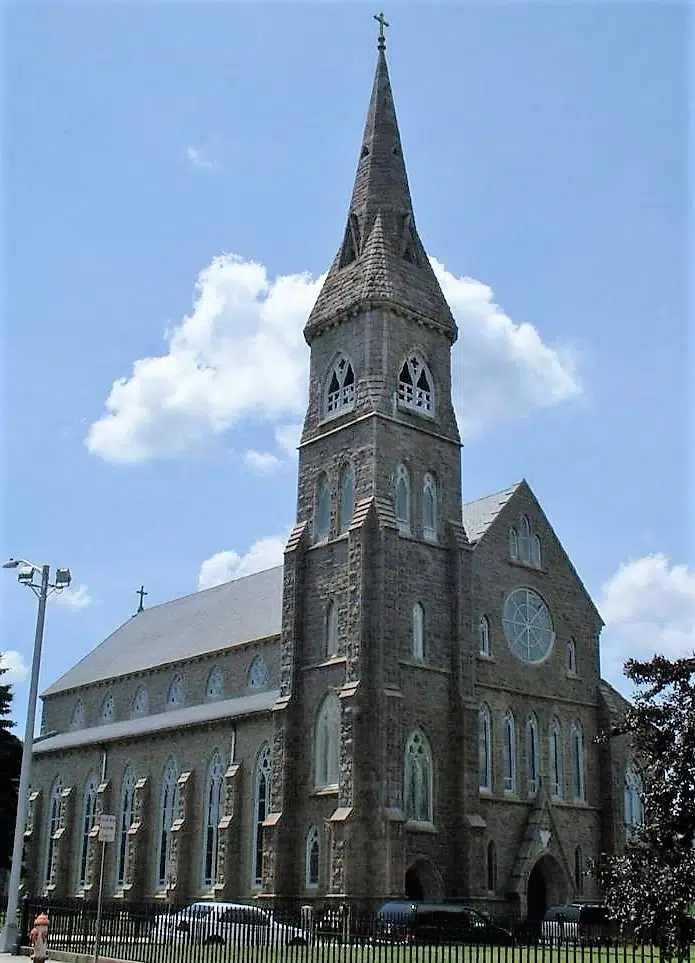
Photo: Cathedral of Saint Mary of the Assumption in Fall River, MA. Photo by ToddC4176 via Wikimedia Commons, licensed under CC BY-SA 3.0.
A sweeping new report from the Massachusetts Attorney General’s Office found evidence that more than 270 Catholic clerics sexually abused nearly 1,000 children over the course of a century in the Dioceses of Fall River, Springfield and Worcester.
The report follows a multi-year investigation that began in 2019 and examined how the three dioceses responded to allegations of child sexual abuse, whether diocesan leaders violated Massachusetts law and whether current church practices continue to put children at risk.
Attorney General Andrea Joy Campbell said investigators reviewed more than 300,000 pages of documents and interviewed more than 100 people, including survivors, advocates, clergy, diocesan employees, attorneys and experts in child sexual abuse and canon law.
The investigation did not result in any new indictments.
Campbell stated that investigators identified conduct that would be illegal today, but some of it occurred before Massachusetts strengthened its child-protection laws in 2002. Other conduct fell outside the applicable criminal statutes of limitations.
Still, the Attorney General’s Office said the investigation uncovered decades of institutional failures and intentional concealment of child sexual abuse.
Report Finds Decades of Concealment and Institutional Failures
According to Campbell, diocesan leaders repeatedly failed to respond appropriately to allegations and warning signs involving abusive priests.
The report found that church officials transferred accused or offending priests to other parishes without disclosing why they were being moved.
Some priests were returned to ministry after treatment without sufficient supervision.
In other cases, diocesan officials failed to adequately enforce restrictions, concealed the reasons priests were removed from ministry or failed to consistently report allegations to law enforcement.
Campbell said the investigation was intended not only to document individual allegations, but also to examine the institutional systems that allowed abuse to continue.
The Attorney General’s Office described the report as the first comparable public accounting of clergy sexual abuse in the Fall River, Springfield and Worcester dioceses.
Previous investigations and reporting had already documented widespread clergy abuse and institutional failures within the Archdiocese of Boston.
No New Criminal Charges Despite Evidence of Misconduct
The Attorney General’s Office said it carefully reviewed whether criminal charges were still possible.
In some cases, the conduct under review was not a crime under Massachusetts law at the time it occurred. Because criminal laws generally cannot be applied retroactively, prosecutors could not bring charges based on statutes passed years later.
In other cases, conduct identified during the investigation was barred by the statute of limitations.
Campbell stated that these legal barriers do not lessen the seriousness of what investigators documented.
The report instead provides a historical record of how allegations were handled and where the state believes institutional practices failed survivors and children.
Catholic Church Sexual Abuse Lawsuits
SurvivorsRights.com tracks Catholic Church sexual abuse lawsuits, investigations, settlements and changing state laws that may affect survivors’ ability to bring claims.
Massachusetts Law Can Still Block Civil Claims
Campbell also used the report to call attention to legal barriers facing survivors who want to pursue civil claims.
Massachusetts law can prevent some survivors from filing lawsuits because of the statute of limitations, even though childhood sexual abuse is often disclosed years or decades after it occurs.
The state’s charitable immunity cap is another major obstacle.
Campbell noted that Massachusetts’ charitable immunity cap remains at $20,000 and has not changed since 1971. That limit can sharply restrict how much a survivor may recover in certain cases involving nonprofit institutions.
Survivors whose claims have already expired may also have no opportunity to bring those claims under current law.
The Attorney General’s Office said it supports legislation that would:
- eliminate the civil statute of limitations for childhood sexual abuse claims;
- eliminate the charitable immunity cap for childhood sexual abuse claims; and
- create an indefinite lookback period allowing survivors with expired claims another opportunity to file suit.
Campbell stated that civil litigation can play an important role in holding institutions accountable when criminal prosecution is unavailable.
Report Calls for Changes Within the Catholic Church
The report also recommends changes to how the dioceses respond to allegations of abuse going forward.
Among those recommendations are stronger trauma-informed practices, more consistent reporting of allegations to authorities, stricter enforcement of restrictions placed on accused or offending clergy and greater transparency with survivors and parish communities.
Campbell urged church leaders to implement meaningful reforms rather than viewing the investigation solely as an examination of past misconduct.
She said institutions should never place their own reputation or interests above the safety of children.
Survivors Helped Build the Record
The Attorney General’s Office repeatedly credited survivors who participated in the investigation.
Many provided written accounts of abuse that are included in an appendix to the report.
Campbell said those accounts were essential to understanding not only what happened to individual survivors, but how diocesan systems responded when abuse was reported.
The report’s release also reflects a broader shift in clergy abuse investigations across the country, where state attorneys general have increasingly examined patterns of institutional conduct rather than focusing only on individual accused clergy members.