Skip to content

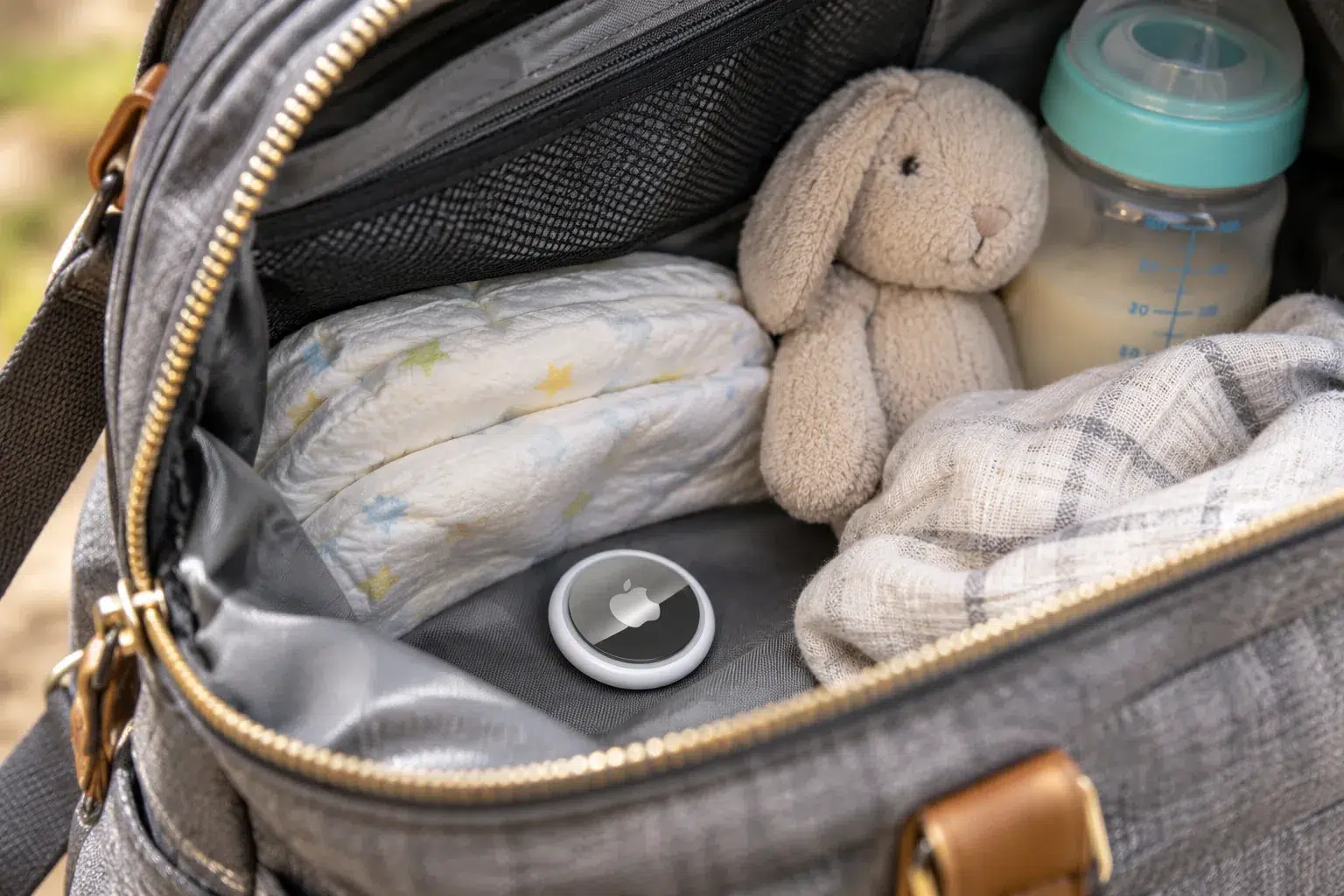
A Washington State woman is suing Apple after discovering that her husband allegedly hid AirTags in her child’s diaper bag and two vehicles, allowing him to monitor her movements during months of domestic abuse,
The lawsuit, filed October 27 in federal court in Tacoma, alleges that Apple’s tracking safeguards were inadequate because someone with access to her iPhone could disable unwanted-tracking notifications without her knowledge.
According to the complaint, the woman discovered three AirTags between May and October 2024. Other people’s phones detected the devices, but her own iPhone allegedly failed to warn her.
AirTags Allegedly Hidden in Child’s Diaper Bag and Vehicles
The woman says the first tracker was discovered by her adult daughter during an out-of-state family visit in May 2024.
It had allegedly been concealed in a diaper bag belonging to the woman’s young son.
Another AirTag was later found inside the rear-seat upholstery of her vehicle. A third was discovered in the center console of her husband’s car, which she had borrowed for a trip to Oregon.
According to the lawsuit, other people’s phones issued warnings about unfamiliar AirTags during these trips. But the woman’s iPhone provided no comparable alerts.
The complaint alleges that her husband knew her phone’s passcode and repeatedly accessed the device to disable notifications intended to warn users about unwanted tracking.
When confronted about the hidden devices, he reportedly claimed he was protecting his property.
Apple AirTag Stalking Lawsuits: Know Your Legal Options
Survivors who were secretly tracked using Apple AirTags may have grounds for legal action.
Learn about the growing litigation against Apple, potential compensation, evidence to preserve and steps you can take.
–> Apple AirTag Lawsuit Guide.
Lawsuit Describes Broader Pattern of Domestic Abuse
The AirTag tracking was allegedly part of an increasingly abusive relationship.
The complaint describes physical violence, sexual assaults, threats and controlling behavior. The woman alleges that her husband also restricted her access to money and personal documents.
In October 2024, she sought a domestic violence protection order after an incident involving their young son and threats against her safety.
The following month, Kitsap County Superior Court issued a one-year protection order.
According to the lawsuit, the court found that her husband posed a credible threat and prohibited him from approaching her or using electronic surveillance to track her movements.
The woman says the experience left her struggling with fear, sleep disturbances and other emotional effects. She also alleges that the stalking contributed to the loss of her job and substantial legal expenses.
Complaint Challenges Apple’s Safety Settings
Apple introduced AirTags in 2021 to help consumers locate misplaced belongings through its Find My network.
The small Bluetooth devices transmit signals that nearby participating Apple devices can detect. Those devices then help report the tracker’s approximate location to its registered owner.
Apple has added safeguards intended to alert people when an unfamiliar tracker appears to be traveling with them.
But the Washington lawsuit argues that those protections can be undermined when an abusive partner gains access to the victim’s phone.
The complaint alleges that Apple should require stronger verification before unwanted-tracking alerts can be disabled.
It also argues that users should receive warnings when critical tracking protections have been changed and that Apple should take additional steps to prevent hidden AirTags from continuing to report someone’s location.
The woman is pursuing claims involving defective product design, failure to warn, negligence and violations of Washington’s Consumer Protection Act.
Her lawsuit seeks financial damages and court-ordered changes to Apple’s safety protections.
Case Adds to Federal AirTag Stalking Litigation
The complaint was filed weeks after a federal judicial panel established multidistrict litigation involving Apple AirTags.
On October 2, the panel consolidated 17 lawsuits in the Northern District of California before U.S. District Judge Noël Wise.
The cases share allegations that Apple knew its tracking devices could be misused for stalking but failed to implement adequate safeguards.
The panel also identified 12 additional related lawsuits that could eventually join the proceedings.
Centralizing the litigation allows the cases to share evidence concerning Apple’s product design, safety decisions and knowledge of unwanted-tracking risks.
For people who discover an unfamiliar AirTag among their belongings, preserving tracking notifications, documenting where the device was found and considering their immediate safety may be important steps.
Evidence of unwanted tracking, threats, protective orders and related injuries may also become relevant when evaluating a potential civil claim.