 Skip to content

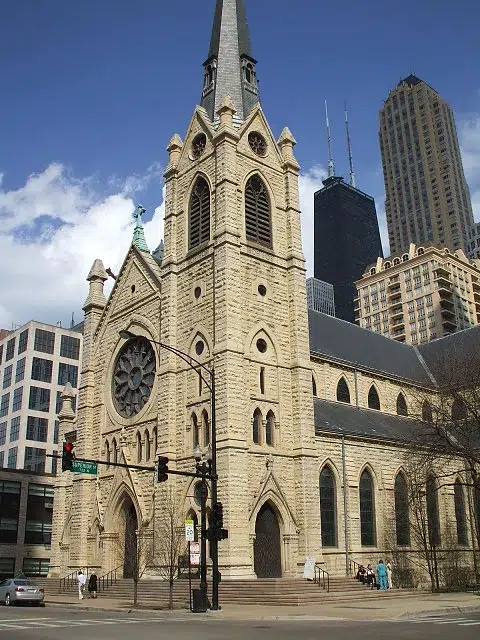
Image: Holy Name Cathedral in Chicago, Illinois, by Gerald Farinas – Own work, CC BY 2.5 (opens in a new tab), via Wikimedia Commons (opens in a new tab).
For more than 30 years, Michael Hoffman kept a painful secret about his childhood. Then, one morning, he opened a newspaper and discovered that the priest who had sexually abused him was being sued by former classmates.
Hoffman recognized the plaintiffs’ names. They were boys he had known growing up in suburban Chicago, and their allegations brought back memories he had spent decades trying to put behind him.
In a commentary published today in the Chicago Sun-Times (opens in a new tab) titled, “Planting the seeds of healing for church sex abuse survivors,” Hoffman describes how that discovery eventually led him to disclose his abuse, seek support and become an advocate for other survivors.
Today, Hoffman chairs the Archdiocese of Chicago’s Hope and Healing Committee and serves as executive director of the National Catholic Restorative Justice Initiative.
But his journey began with a difficult conversation at home.
Finding the Courage to Share His Story
Hoffman recalls experiencing sleepless nights, nausea and anxiety after learning about the lawsuits. He knew he needed to tell his wife what had happened, but feared bringing the painful memories into their marriage.
The priest, Hoffman writes, had earned the trust of families in their North Shore community before betraying the children entrusted to his care.
When Hoffman eventually disclosed his abuse, the response from his wife and others he trusted helped him begin confronting its effects.
He also reported his experience to the Archdiocese of Chicago through its Independent Review Board process.
Hoffman says being believed was particularly important. Rather than feeling dismissed or questioned, he found people willing to listen and support him.
That experience helped shape his understanding of healing, which Hoffman describes as a lifelong process rather than something that can be completed or neatly resolved.
Creating a Place Where Survivors Can Gather
About 15 years ago, Hoffman helped establish the Archdiocese of Chicago’s Healing Garden (opens in a new tab).
The garden was developed through collaboration between survivors and church representatives. Hoffman describes it as a permanent public acknowledgment of the experiences of people who suffered childhood sexual abuse.
Importantly, Hoffman says the garden welcomes people who no longer feel comfortable entering a church.
The space provides opportunities for reflection, remembrance and community gatherings. Each year, survivors and their families assemble there before the Archdiocese’s Mass of Hope and Healing.
For Hoffman, the project demonstrates how listening to survivors can lead to something tangible.
He also recognizes that the process of rebuilding trust is complicated, particularly when the institution involved in supporting survivors is connected to the abuse they experienced.
A National Healing Garden in Washington, D.C.
Hoffman’s work in Chicago has helped inspire a similar project planned for the Catholic University of America in Washington, D.C.
The proposed National Healing Garden (opens in a new tab) will provide a space for survivors of abuse to reflect, gather and participate in community programs.
Hoffman is helping lead the initiative alongside other survivors.
According to Hoffman, the goal extends beyond creating a peaceful garden. He hopes the project will encourage conversations about abuse, accountability, institutional trust and the protection of children.
His continued involvement with the Catholic Church is a personal choice, one that Hoffman acknowledges others may find difficult to understand.
Some survivors retain their religious faith. Others distance themselves from the institutions associated with their abuse. Still others find support outside organized religion altogether.
Hoffman’s experience illustrates one possible path, not a model every survivor is expected to follow.
Healing and Accountability Aren’t the Same Thing
Perhaps the most important distinction Hoffman makes is that institutional accountability doesn’t automatically resolve the personal effects of childhood sexual abuse.
He believes that acknowledging wrongdoing, making information public and listening to survivors are essential steps toward accountability.
Yet Hoffman also recognizes that the harm he experienced remains part of his life, even after decades of advocacy and support.
His decision to share his story eventually connected him with other survivors, opportunities for institutional reform and projects designed to provide spaces for reflection.
For Hoffman, speaking about the abuse was the beginning of that process.
Other survivors may find healing through different relationships, communities or forms of support. And sharing a personal experience doesn’t have to lead to public advocacy.
Hoffman’s story offers a reminder that disclosure can take many years, and that survivors deserve to be heard whenever and however they choose to speak.