Skip to content
Editor’s note: This article is based on allegations contained in a civil complaint filed in Kern County Superior Court, along with reporting from the Los Angeles Times, Associated Press and The United Farm Workers Foundation. The allegations have not been proven in court.
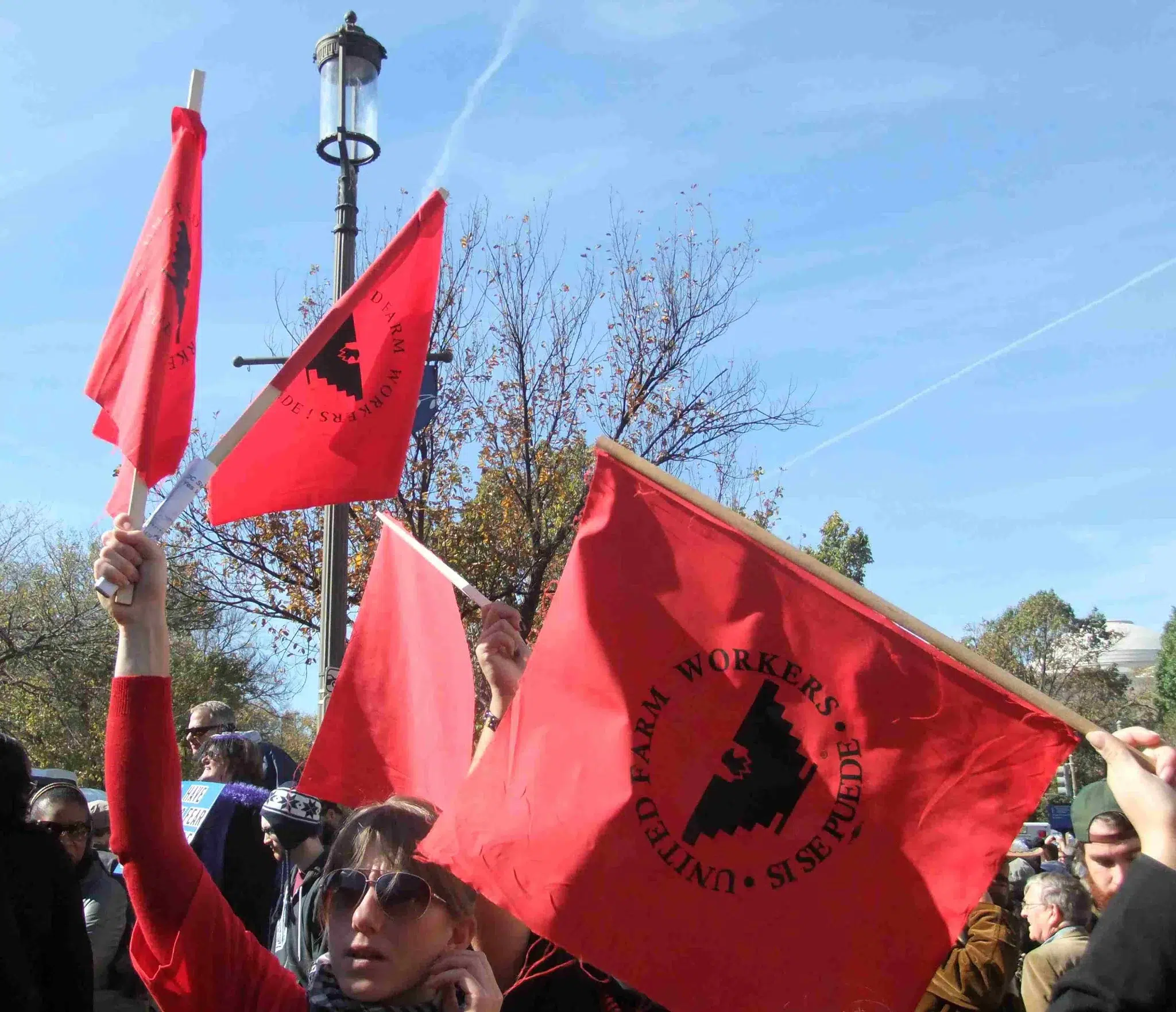
Photo by Martha Soukup via Wikimedia Commons, licensed under CC BY 2.0.
A woman who worked with César Chávez and the farmworker movement has filed a civil lawsuit accusing two nonprofits tied to his legacy of failing to protect her and others from sexual abuse.
The plaintiff, identified as Jane Doe, is now 86. She alleges Chávez raped her in 1973 while she was living with her family at the United Farm Workers compound in Keene, California, and assaulted her again several years later.
The lawsuit was filed Sept. 1 in Kern County Superior Court against the César Chávez Foundation and the UFW Foundation.
It appears to be the first civil lawsuit filed since a March 2026 New York Times investigation brought multiple sexual abuse allegations involving Chávez into public view. (SurvivorsRights.com summarized those allegations here.)
Lawsuit Alleges Organizations Failed to Protect Women
The new complaint also accuses the two nonprofit organizations of enabling abuse, ignoring complaints and concealing evidence of sexual misconduct involving women and girls.
According to the lawsuit, people within the farmworker movement were aware of troubling behavior but failed to investigate or meaningfully intervene.
The plaintiff alleges that women who raised concerns were discouraged from speaking out and that institutional loyalty to the movement helped keep allegations hidden.
The César Chávez Foundation said it was reviewing the complaint with legal counsel. The UFW Foundation had not publicly responded to the lawsuit when the first reports were published.
Plaintiff Says the Abuse Began While She Worked in the Movement
The woman says she first became involved in farmworker organizing as a young adult and later moved with her husband and children to the UFW compound in Keene.
Her lawsuit alleges Chávez arranged a celebration around her birthday in 1973, isolated her from her husband and later assaulted her in her home.
She also alleges a second assault several years later.
The complaint says the abuse caused decades of emotional and psychological harm.
Because SurvivorsRights.com does not need to reproduce the most graphic allegations to explain the case, the important point is that the plaintiff is alleging both direct abuse and a broader institutional failure to respond.
Lawsuit Follows Multiple Earlier Allegations
The new case comes after several women publicly accused Chávez of sexual abuse earlier this year.
The March New York Times investigation reported allegations involving both adult women and girls who said they were minors at the time.
Among those who came forward was Dolores Huerta, Chávez’s longtime colleague and fellow farmworker organizer, who said she had kept her own allegations secret for decades because of her commitment to the movement.
The UFW Foundation responded to the March reporting by calling the allegations involving young women and minors shocking and indefensible and canceled César Chávez Day activities that month.
California Lookback Window Could Lead to More Claims
The lawsuit was filed under a new California revival window that took effect Jan. 1, 2026.
The law gives some adult survivors of sexual assault additional time to bring claims that would otherwise have been barred by the statute of limitations, particularly where an institution is accused of making a concerted effort to conceal evidence of abuse.
The current window is scheduled to remain open through the end of 2027.
Attorneys representing the plaintiff have said they expect additional survivors may come forward before the deadline.
Case Puts Institutional Accountability at the Center
The complaint asks whether organizations built around a powerful public figure can be held responsible when they are accused of protecting that figure, ignoring complaints or keeping evidence of abuse out of public view.
That makes the case especially relevant to broader institutional sexual abuse litigation.
Many abuse lawsuits focus not only on the person accused of committing the misconduct, but also on whether organizations around that person knew of warning signs and failed to act.
For survivors, those institutional questions can be just as important as the allegations against the individual.
Learn More About California Sexual Abuse Lawsuits
California law gives some survivors additional time to pursue civil claims involving sexual abuse and institutions accused of concealing or enabling misconduct.
Learn more about California filing deadlines, institutional liability and legal options in our California Sexual Abuse Attorney Guide.