Skip to content
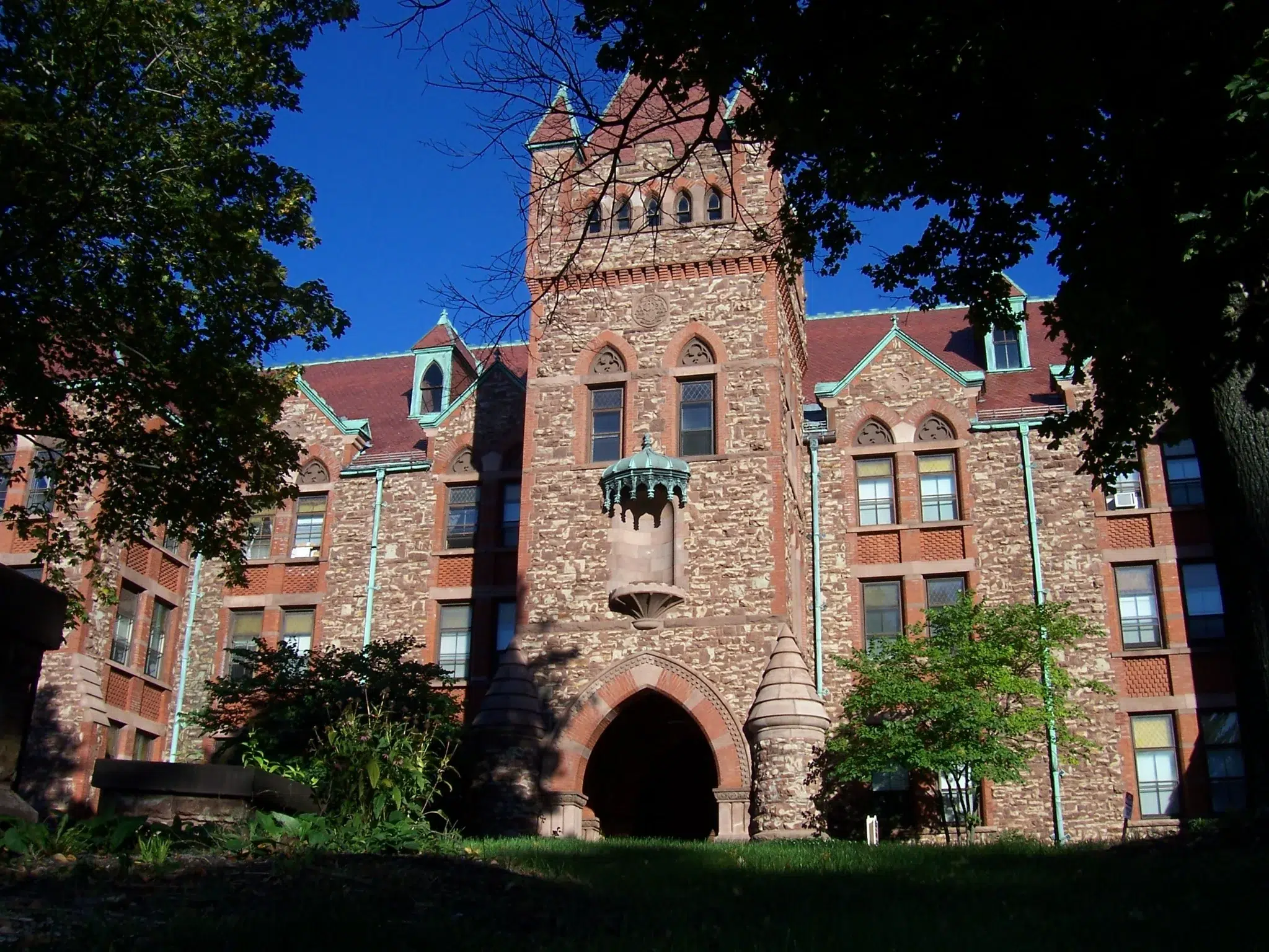
Photo of former St. Bernard’s Seminary in Rochester, NY by Daniel Penfield via Wikimedia Commons, licensed under CC BY-SA 3.0.
One year after a federal judge approved a settlement involving hundreds of childhood sexual abuse claims against the Roman Catholic Diocese of Rochester, survivors are beginning to describe what life looks like on the other side of years of litigation, Dana Damiani of Spectrum News 1 reported.
For some, receiving compensation has brought a measure of financial security and validation.
For others, anger and the effects of abuse remain long after a check arrives.
The Rochester agreement was approved Sept. 5, 2025, after years of bankruptcy proceedings and disputes involving the diocese and its insurers.
Hundreds of survivors had filed claims under New York’s Child Victims Act, which temporarily reopened the courthouse to people whose childhood sexual abuse claims had previously expired under older statutes of limitations.
One Survivor Says Settlement Helped Her Reclaim Her Home
One survivor interviewed by Spectrum News said she was sexually abused by a priest when she was 15 and spent six years involved in the litigation.
During much of that process, she wore black as a symbol of mourning for what she and other survivors had endured.
When the settlement was finally approved, she wore white.
Her compensation arrived months later than she had expected.
She eventually used some of the money to regain full ownership of her home and help her daughter with housing as well.
For her, that brought something tangible after years spent recounting painful experiences in court and waiting through bankruptcy proceedings.
But she emphasized that the payment itself wasn’t what survivors had been seeking for all those years.
For many, the larger goal was acknowledgment and an ending to a process that had consumed years of their lives.
Not Every Survivor Feels Closure
The same survivor said she has remained in contact with others involved in the Rochester cases.
Their experiences after settlement have not all been the same. Some remain angry despite receiving compensation, while others have found more of a sense of finality.
That difference illustrates something that can easily get lost when clergy abuse cases are reduced to settlement totals.
A financial award may provide compensation for harm, treatment costs, lost opportunities or other consequences of abuse. It may also represent institutional acknowledgment that a survivor’s claim was serious enough to warrant compensation.
But it doesn’t determine how someone will feel afterward.
There is no single way a survivor is supposed to respond when litigation ends.
Some Rochester Survivors Are Still Waiting
Not everyone covered by the Rochester litigation has received compensation.
An attorney representing 97 survivors told Spectrum News that some clients were still awaiting payments one year after the settlement was approved.
That means the legal process isn’t completely over for everyone involved.
Attorneys continue to press dioceses, insurers and other Catholic entities over compensation and disclosure issues while survivors wait for the process to reach them individually.
For people who first disclosed abuse decades ago, another year of waiting can be significant.
Rochester Is Part of a Larger New York Reckoning
The Rochester bankruptcy is one piece of a much broader wave of Catholic clergy sexual abuse litigation across New York.
More than 11,000 civil lawsuits were filed during the Child Victims Act lookback period, involving schools, churches, youth organizations and other institutions.
Other New York Catholic dioceses have also turned to bankruptcy as abuse claims accumulated.
The Diocese of Syracuse received court approval in February 2026 for a bankruptcy resolution that included a $100 million survivor trust, while the Diocese of Albany later announced a separate $180 million settlement in its own bankruptcy case.
Proceedings involving the Diocese of Buffalo have also continued. SurvivorsRights.com previously reported on the diocese’s initial $150 million settlement with more than 800 survivors and its later nearly $275 million reorganization plan to compensate more than 900 survivors.
Each case has its own financial structure, insurance disputes and number of survivors, but the underlying issue is similar: allegations that children were abused within trusted religious institutions and that survivors then spent years and sometimes decades seeking recognition and accountability.
Compensation Can Be Validation Without Being a Cure
The Rochester anniversary is a useful reminder that settlement figures tell only part of the story.
A bankruptcy agreement can end litigation, and a payment from that settlement can make housing more secure, cover expenses like therapy, or provide opportunities that were previously out of reach.
It can also serve as a form of validation after a survivor spent years believing an institution would never acknowledge what happened.
But survivors don’t automatically leave their trauma behind when a case closes.