Skip to content
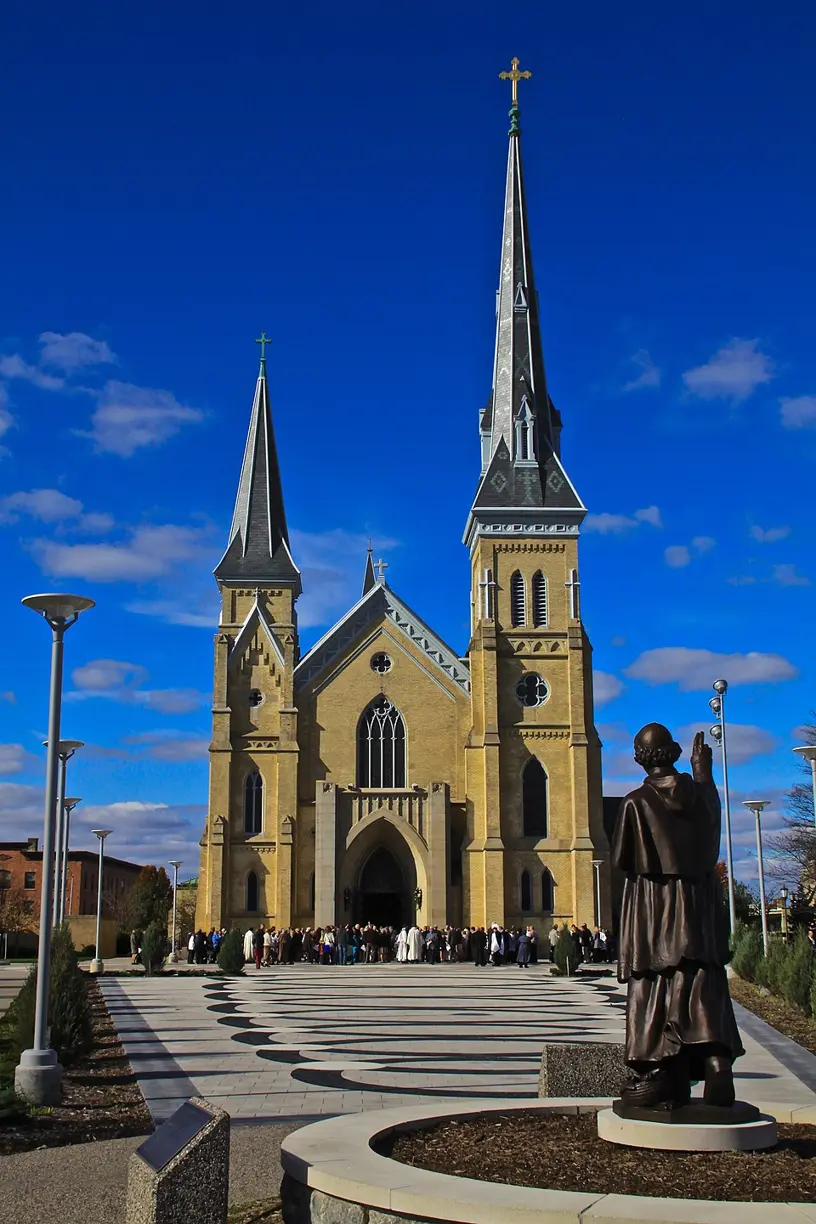
Photo: Cathedral of St. Andrew in the Diocese of Grand Rapids, MI; via Wikipedia.
Michigan Attorney General Dana Nessel has released a detailed report outlining allegations of sexual abuse involving dozens of priests connected to the Diocese of Grand Rapids, WILX NewsChannel 10 reported yesterday.
The report names 51 priests accused of sexual misconduct against children or adults dating back to January 1, 1950. No criminal charges were filed as a direct result of the report.
The 336 page report is the fifth in a series of seven clergy abuse investigations being conducted by the Attorney General’s office. These reports cover allegations across Michigan’s six Catholic dioceses and the Archdiocese of Detroit. According to the Attorney General, the purpose of the reports is to acknowledge survivor accounts and publicly document the findings of the state’s investigation.
In 2018, the Attorney General’s office executed search warrants at all seven Michigan dioceses, seizing 220 boxes of paper records and more than 3.5 million digital documents. The Grand Rapids report compiles information drawn from those materials, along with tips submitted through the clergy abuse hotline, police reports, survivor interviews, open source reporting, and other sources.
Why No Criminal Charges Were Filed
Despite naming dozens of accused priests, the investigation into the Diocese of Grand Rapids did not result in criminal prosecutions. Attorney General Nessel explained that in many cases, the accused priests were deceased or the statute of limitations had expired. In other instances, survivors chose not to pursue criminal charges, or prosecutors concluded they could not prove the elements of a crime beyond a reasonable doubt.
The Attorney General emphasized that accountability is not limited to criminal prosecution. She stated that transparency, acknowledgment, and support for survivors remain essential, regardless of how much time has passed since the alleged abuse occurred.
Diocese Cooperation and Report Scope
The Diocese of Grand Rapids agreed to provide abuse reports to the Attorney General’s office, a factor officials said was instrumental in compiling the findings. Survivors often report abuse to faith leaders, making diocesan cooperation critical to uncovering historical misconduct.
The report includes detailed descriptions of alleged sexual abuse, grooming behaviors, misuse of authority, and misconduct involving both minors and adults. Many allegations could not be prosecuted due to expired statutes of limitations, the death of the accused priest, or because the conduct did not violate Michigan law at the time. In some cases, survivors declined to participate in criminal proceedings.
The Attorney General’s office noted that inclusion in the report does not constitute a determination that allegations are credible or substantiated, and that individuals named are presumed innocent unless proven guilty.
Church Response and Ongoing Reforms
Following the report’s release, the Bishop of the Diocese of Grand Rapids acknowledged the seriousness of the findings and pointed to changes implemented over recent decades, including the hiring of a victim assistance coordinator and participation in child safety audits. He stated the report presents an opportunity for the Church to recommit to reform and to encourage survivors to come forward.
Statewide Clergy Abuse Investigations
Since the clergy abuse initiative began in October 2018, criminal charges have been filed in 11 cases involving Catholic priests across Michigan. These prosecutions stemmed from investigations involving dioceses throughout the state, with convictions, sentences, and ongoing proceedings documented by the Attorney General’s office.
The clergy abuse tip line has received 1,228 tips statewide, leading to numerous police investigations, more than 180 survivor interviews, and over 285 police reports. For the Diocese of Grand Rapids specifically, investigators reviewed 105 tips, including 27 provided directly by the Diocese. Of the seized records, approximately 150,000 paper documents and nearly 272,000 electronic documents related to Grand Rapids were reviewed.
The release of the Grand Rapids report follows the Attorney General’s prior report on the Diocese of Lansing and reflects the continued scope of Michigan’s clergy abuse investigation.
Are You a Catholic Clergy Abuse Survivor?
Learn more about how these cases are investigated and litigated with our Catholic Church sexual abuse lawsuit guide. If you are ready to explore your legal options, you can request a free case review by filling out the confidential and secure form below.